

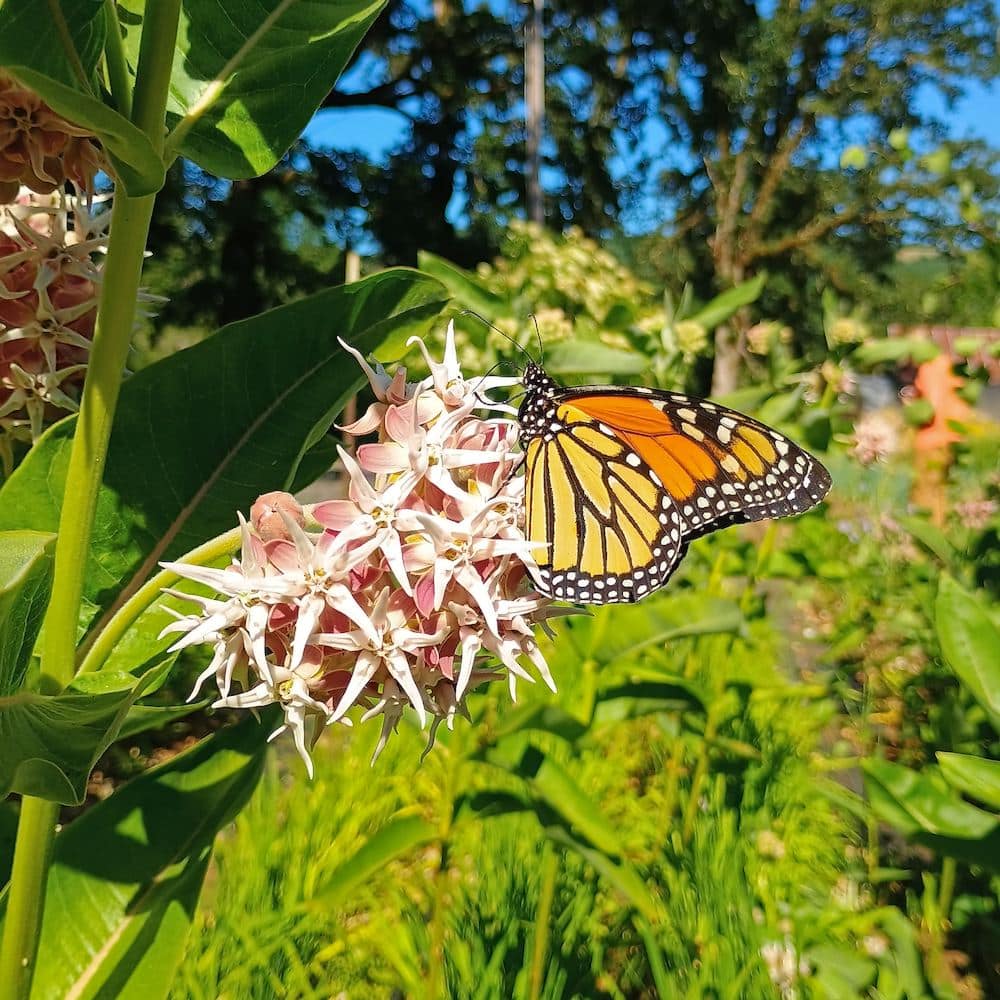

Milkweed, Showy (Organic)
Asclepias speciosa. Perennial to zone 3.
Showy Milkweed is native to all Western states and is the most common species of milkweed native to Oregon. Plants grow to 4’-5’ tall when irrigated, with large, pale green, lobe-shaped leaves. Milkweed is known to thrive along roadside ditches and other neglected areas, where it tends to grow much shorter. The flowers are out of this world and are also visited by hummingbirds and other pollinators looking for nectar. Plants spread slowly via rhizomes. It may take several years for plants to flower from seed. The milky sap produced when cutting milkweed is toxic to animals if consumed in large quantities, and is the source of the monarch butterfly’s boldly advertised inedibility.
A nationwide campaign to plant milkweed is underway, but care must be taken to plant the species native to each region. Milkweeds are required by Monarch butterflies for their annual multi-generation migration from Mexico to Canada and back (!). Monarchs have been in decline for years and the migratory monarch butterfly (Danaus plexippus plexippus) has been considered Endangered by the International Union for Conservation of Nature (IUCN) since 2022, due to habitat destruction and climate change. We planted our Showy Milkweed patch in 2016 and were thrilled to observe our first monarch butterfly visitor in June of 2025! Check this map to find out if Showy Milkweed is right for your location.


Milkweed seed can exhibit dormancy and benefits from cold stratification; a simple way to do this is to sow outdoors in autumn or in early spring, 6-8 weeks before last frost. To stratify indoors, place seeds on a moist paper towel in a plastic bag in the refrigerator for three to six weeks prior to sowing. Germination occurs in 7-10 days at temps of 65˚-80˚F after stratification. May be direct sown, however sowing in pots is recommended. Transplant to 12″ centers when plants have four true leaves after danger of frost has passed. Long-lived perennial; will slowly spread via rhizomes. May take several years to flower when grown from seed. Prefers full sun.
Seed Saving
Collect seeds from flower heads that are fully dry. Thresh by hand or by dancing, winnow to clean. Finish air-drying if necessary before sealing in airtight container. Cross-pollinates easily; if seed saving isolate from other varieties of the same species by 1/2 mile.
What others are saying
There are no contributions yet.