

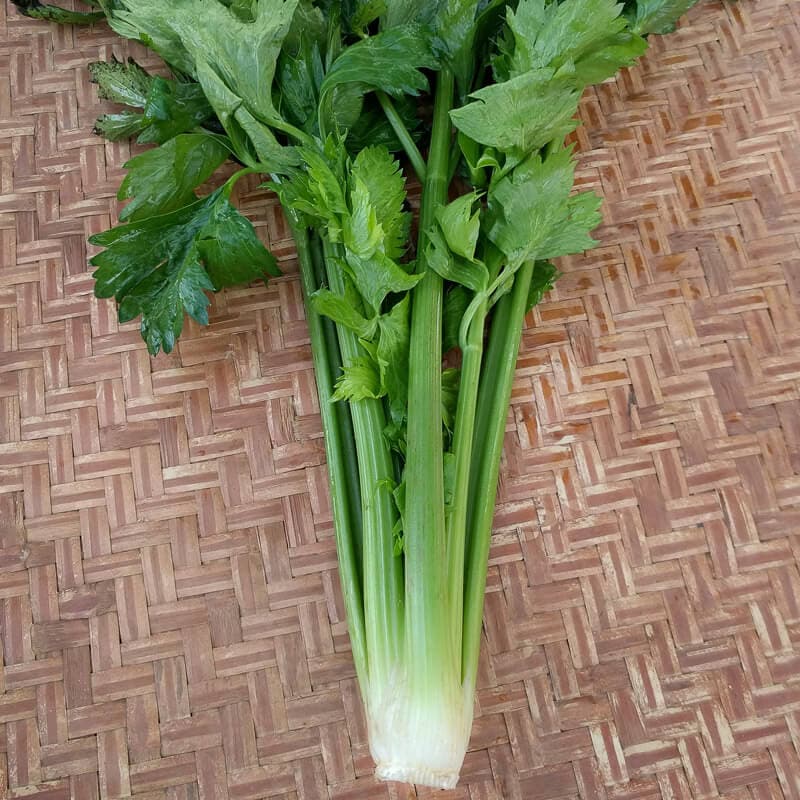
Celery, Ventura (Organic)
Apium graveolens. 80-100 days.
The classic American celery! An improved Tall Utah type, Ventura celery is named after the town Andrew grew up in. When he was a kid riding his bike around Ventura, California, he saw many fields of celery growing interspersed with strawberry fields and lemon orchards. Once one of the most common workhorse celery varieties, Ventura has recently become less common and has undeservedly been eclipsed by proprietary celery varieties. Ventura is productive and perfect for market farms and home gardens alike. It has great sweet flavor with that delicious celery crunch. We find celery tastes better when grown organically, giving it more of that celery zing – especially when given lots of fertility and water. Winter hardy down to about 20°F. Good fusarium and bolt resistance.


| Geographical Origin |
|---|
Sow in pots indoors March through April. Germination in 2-3 weeks. Transplant in fertile soil when plants are 3” tall, to 4-8” centers for celery leaf and 12″ centers for celeriac/celery. Keep well fertilized, watered, and cultivated. Harvest leaves as needed or whole plants when mature.
Seed Saving
Collect seeds in second year from 15 or more plants for replanting or culinary use. Cut seed stalks when seeds are dry, thresh by hand, dancing, or hitting seed stalk against sides of a bucket. Winnow and screen to clean. Isolate from other A. graveolens by at least ¼ mile.
benflath (verified owner) –
Where did you grow this variety? Oregon
Great option for growing celery at home! Germination was excellent, so we ended up planting about twice as many as we had planned. Other than watering and pest management, we didn’t need to do much else until we started harvesting. We discovered later in the season that they really started to take off once we began harvesting the outer stalks. Next time we grow them we’ll do this earlier in the season. That said, they’re still growing in January, though not as quickly. They have a good, strong flavor with excellent crunch. Unlike other celery varieties we’ve grown, these weren’t overly fibrous, so we could eat them fresh as well as use them in cooking. They will definitely be part of our regular rotation!
Upvote if this was helpful (0) Downvote if this was not helpful (0) Watch Unwatch Flag for removal