

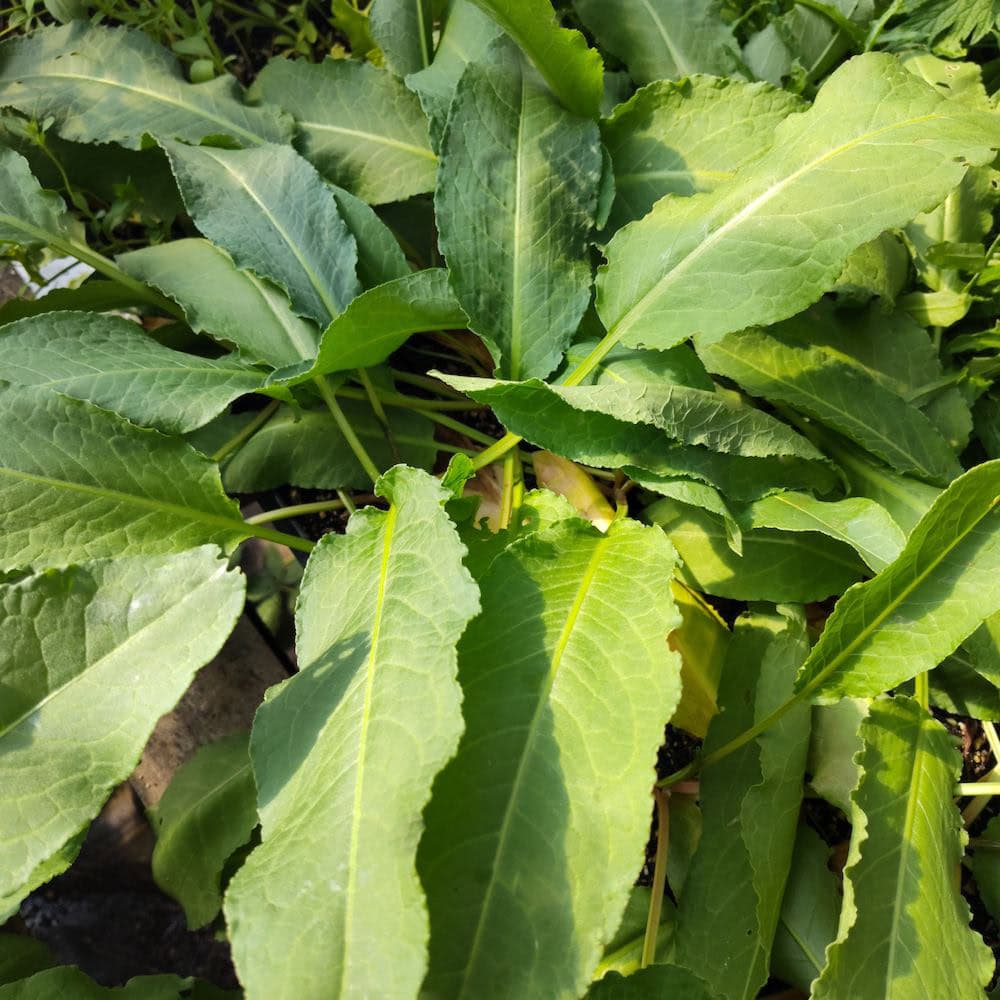
Patience Dock (Organic)
Rumex patientia. 75 days. Perennial to zone 5.
A semi-wild perennial with a long culinary history in Central and Eastern Europe that is right at home with Transylvanian Sorrel, Buck’s Horn Plantain, and Salad Burnet. Patience Dock can be used as a salad green while young, although best used as a sauté green (cooked like spinach) when slightly more mature. Leaves have a mild, slightly lemony flavor and have a high mineral content, but also contain oxalic acid and are best not consumed in extreme quantities. Greens sprout early in the spring to fill in the hungry gap before the annual garden gets going and can be harvested through early June. Plants form an unassuming basal rosette and grow to about 12” across with strap-shaped leaves that grow to 1-2’ long. This is the kind of plant to stash in the back of the garden, where it will pretty much take care of itself until you need it – but be sure to cut the flower stalk before the seed is mature if you don’t want it to spread. Drought tolerant but may go dormant in the summer. Check out this great video for more!
Patience Dock is native to Central and Eastern Europe but is naturalized in many parts of North America. We first found Rumex patientia seed in an old Abundant Life Seed packet labeled “German Spinach.” Then later, while in Germany, we asked several knowledgeable gardeners about this nomenclature of seemingly poor taste. After either laughing or scoffing, they all said something like “Why would you call it German Spinach when we eat (normal) spinach here?” Ironically, one of the German names for this plant is Englischer Spinat. Whatever the name, Patience Dock was eaten throughout much of Europe before modern industrial agriculture and in hungry times during and after the world wars but it is not common anymore. Aka, Garden Patience, Vegetable Dock.


| Geographical Origin |
|---|
Sow in pots indoors February through August and transplant to about 12″ between plants, 3-4 weeks after sprouting. May also be direct sown from early spring through late summer. Grows well in part shade or full sun and will grow in most soil types. Perennial plant so chose a permanent position in the garden. To promote perennial regrowth, do not harvest aggressively in the first year. To maintain productivity, apply compost and/or mulch each spring.
Seed Saving
Cut seedheads when seeds are dry, thresh by hand or by dancing, winnow to clean.
What others are saying
There are no contributions yet.