



Leek, Babington’s (Organic)
Allium ampeloprasum var. babingtonii
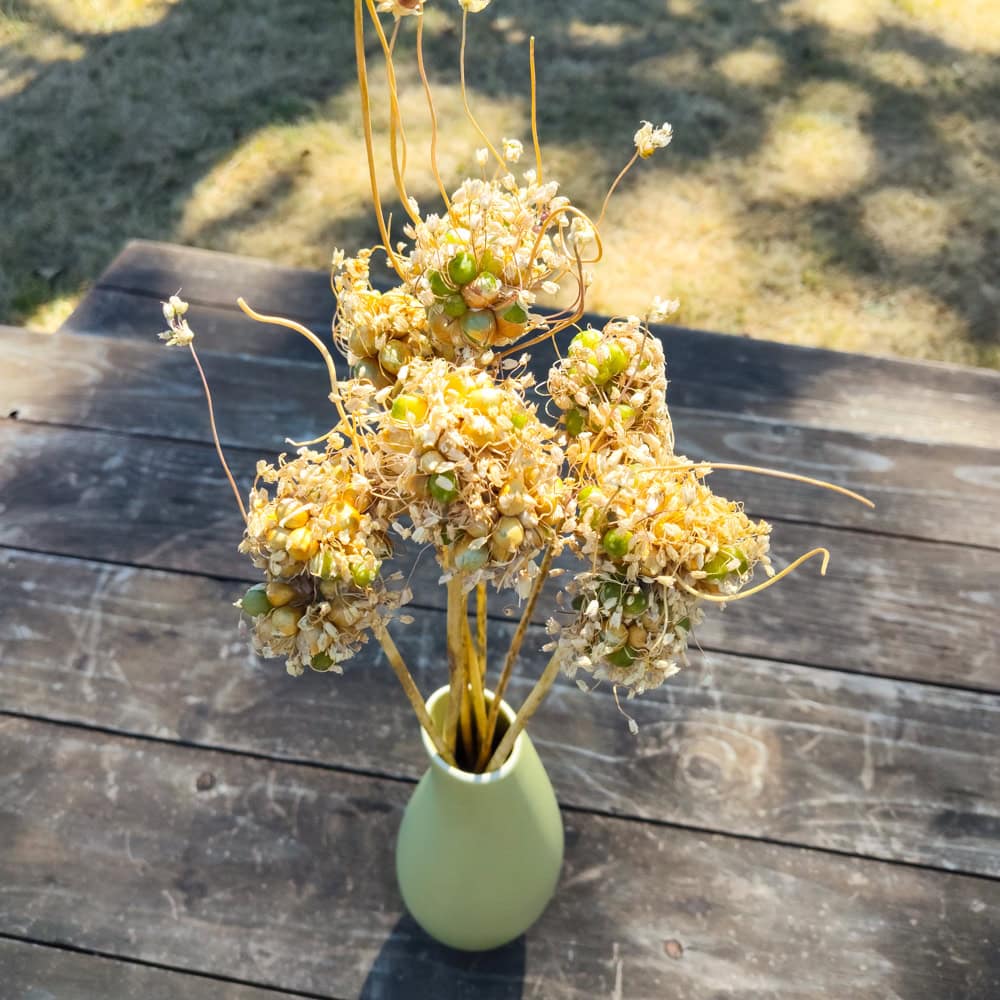
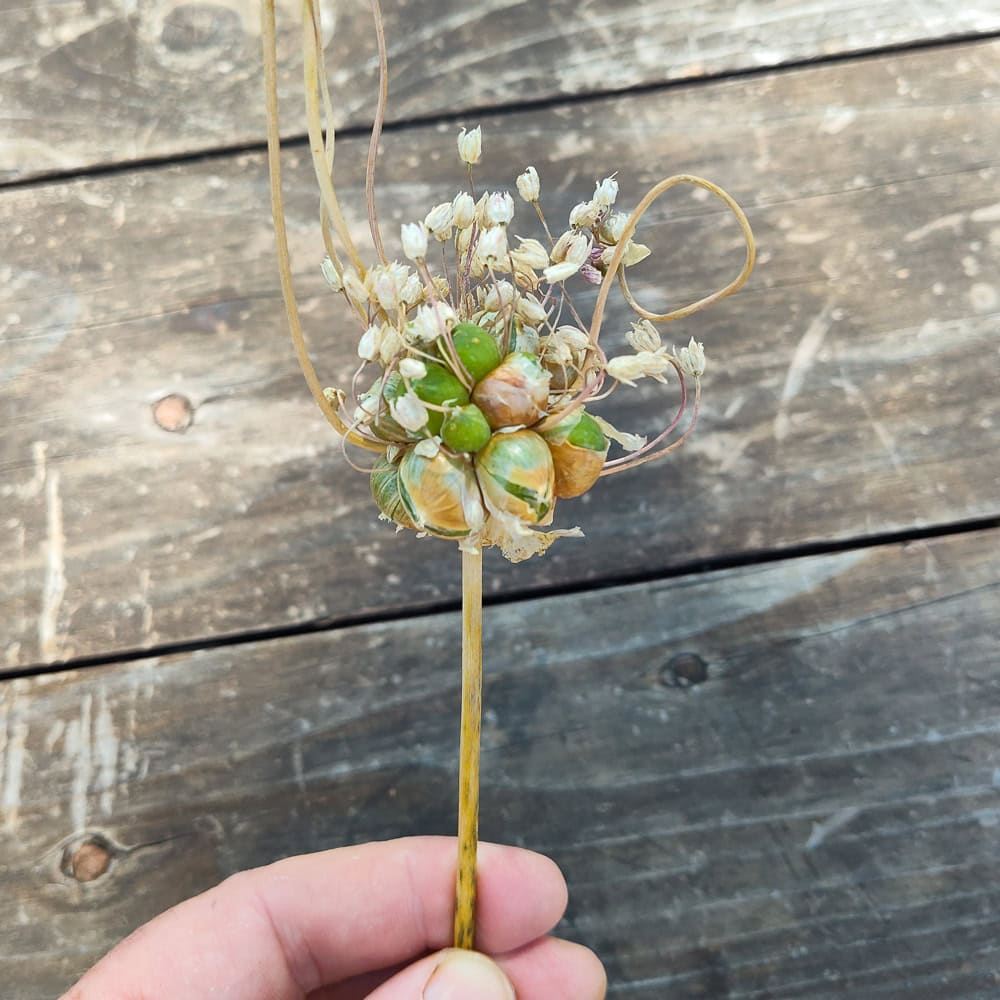
Babington’s Leek is a special perennial vegetable that is propagated from top-setting bulbils. Occasionally found growing wild in the British Isles where it may be native, but extremely rare in North America. A worthwhile plant to have growing in any garden but especially sought after for semi-wild perennial permaculture plantings and food forest edges. While it is possible to sow annually for vegetable harvest of small delicious leeks, Babington’s Leek really shines as a cut and come again perennial.
After the second year, the tops can be cut back at the soil level in the spring and the plants will grow back happily. If left to flower, the scapes can be harvested while tender for use like asparagus but with a garlic-leek flavor. After the flower heads make their fabulous bulbil-laden alien wands (seriously, they are so cool looking it’s worth planting just for the flower stalks), the plants die back to resprout in the fall as the cool rains arrive. The bulbils themselves are edible and it has been said that they make good pickles.
Plants have been hardy for us down to at least 5˚F, needing no protection, and are reportedly hardy to -4˚F (USDA Hardiness zone 6b). Plants also slowly multiply from underground bulblets. We found our first Babington’s Leek bulbils shared at a Eugene, Oregon seed swap, gifted by Mushroom and Linda Kapuler of Peace Seeds.
For more information on this botanical treat, check out this post at Backyard Larder. Here is a video from the Permaculture Association in the UK starring our friend Holly Silvester on how to propagate this crop.
*Orders containing both Babington’s Leek and garlic or shallots will ship with the garlic and/or shallots by late September.
Limit 2 per order. No international orders.
GARLIC IS SOLD OUT FOR 2025
Thank you for a great garlic season!
Garlic will not return to stock until Aug/Sept 2026.
For an impressive diversity of seed garlic, we recommend Garlicana, who still has planting stock available.


Plant bulbils 1” deep from September through February. Space plants 6-8” apart in rows 1’ apart. Apply extra fertilizer February-March for bigger plants. Plants may take 2-3 years to flower and produce more bulbils. Part to full sun is best for the most abundant growth.
Seed Saving
Select largest healthiest bulbil clusters for seed. Bulbils left on the seed head can be stored in a cool dry place for up to 12 months.
allen9720 (verified owner) –
Where did you grow this variety? Other
Planted in a 2ft by 4 ft raised bed.
Never sprouted.
I’m in zone 7b, TX 79413
Things don’t always grow per the descriptions that are listed.
I have placed another order for these (for 2025) and will try them again.
Other proudcts have done well here, so I’m hopefull
Upvote if this was helpful (0) Downvote if this was not helpful (0) Watch Unwatch Flag for removal