

Chicory, Variegata di Castelfranco (Organic)
Cichorium intybus. Loose heading type. 70 days.
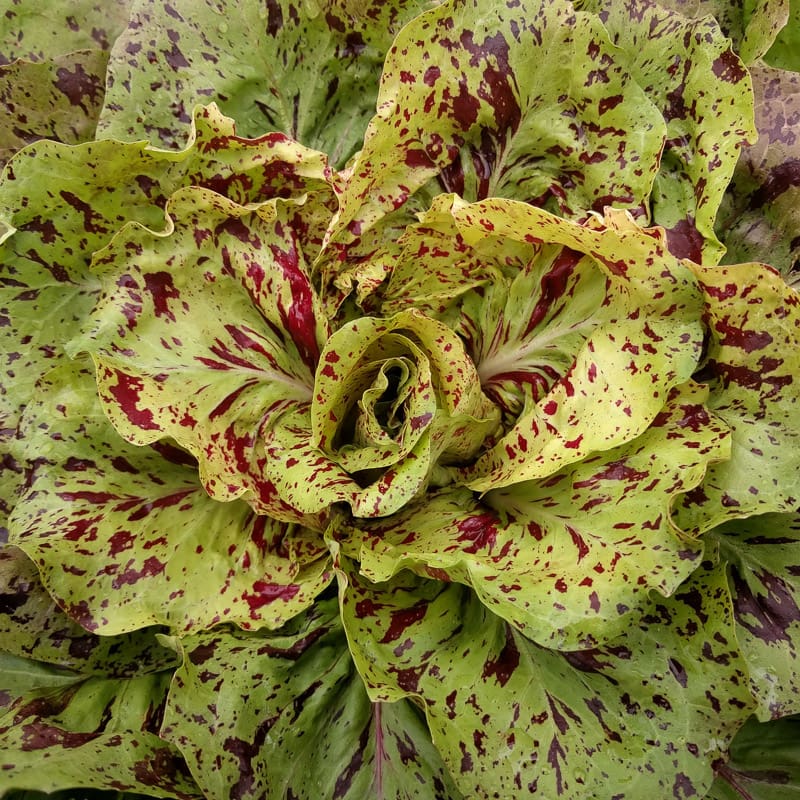
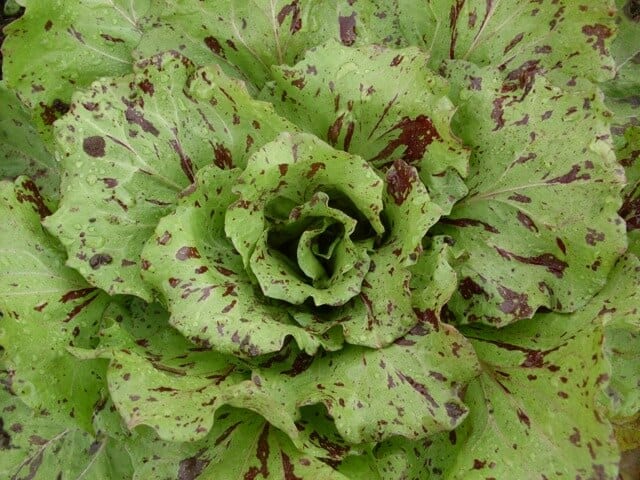
Chicories are becoming more popular in the Pacific Northwest with castelfranco and sugarloaf leading the charge. Why? Because they’re delicious! Variegata di Castelfranco is a big heading chicory with lots of bright colors, mostly green with red speckles. If planted in July or early August, it will head up for winter. If planted late, it can still be harvested as a loose head. If dug and forced, it creates a beautiful white and pink head similar to radicchio. A winter CSA staple because it is hardier than most other Cichorium varieties. Another great variety for winter salads or used in risotto.
Seed produced by Avoca in Corvallis, Oregon.

| Geographical Origin |
|---|
Sow indoors with good potting soil February through September. Transplant into the garden 3-4 weeks after sprouting. In our area, chicory can grow through the winter without protection but is best when sown in June or July for this purpose. Alternatively, direct sow March through August.
Seed Saving
Collect seeds from 10 or more plants in second year when seeds have dried down. Cut whole plants, place on tarp, then dance and stomp to free the seed. Or place dry plants on tarps and drive on them. Screen and winnow to clean. Isolate from other Cichorium sp. by ½ mile.
Janet Pihlblad (verified owner) –
Where did you grow this variety? Northeastern US
This was beautiful in salad mixtures. I grew it under a plastic cover over low hoops in Central NJ. In the fall the speckles didn’t show up until it got colder, in early December. Almost everything stops growing here in January, but this took off in late February, and was just stunning with the color and speckles. This is the second winter I’ve grown it, and the December salads were also gorgeous with this green added to them. I just wish it had an easier name to tell people what it is!
Upvote if this was helpful (1) Downvote if this was not helpful (0) Watch Unwatch Flag for removal