

Bush Dry Bean, Agassiz Pinto (Organic)
Phaseolus vulgaris. Tan Speckled. 88 days.
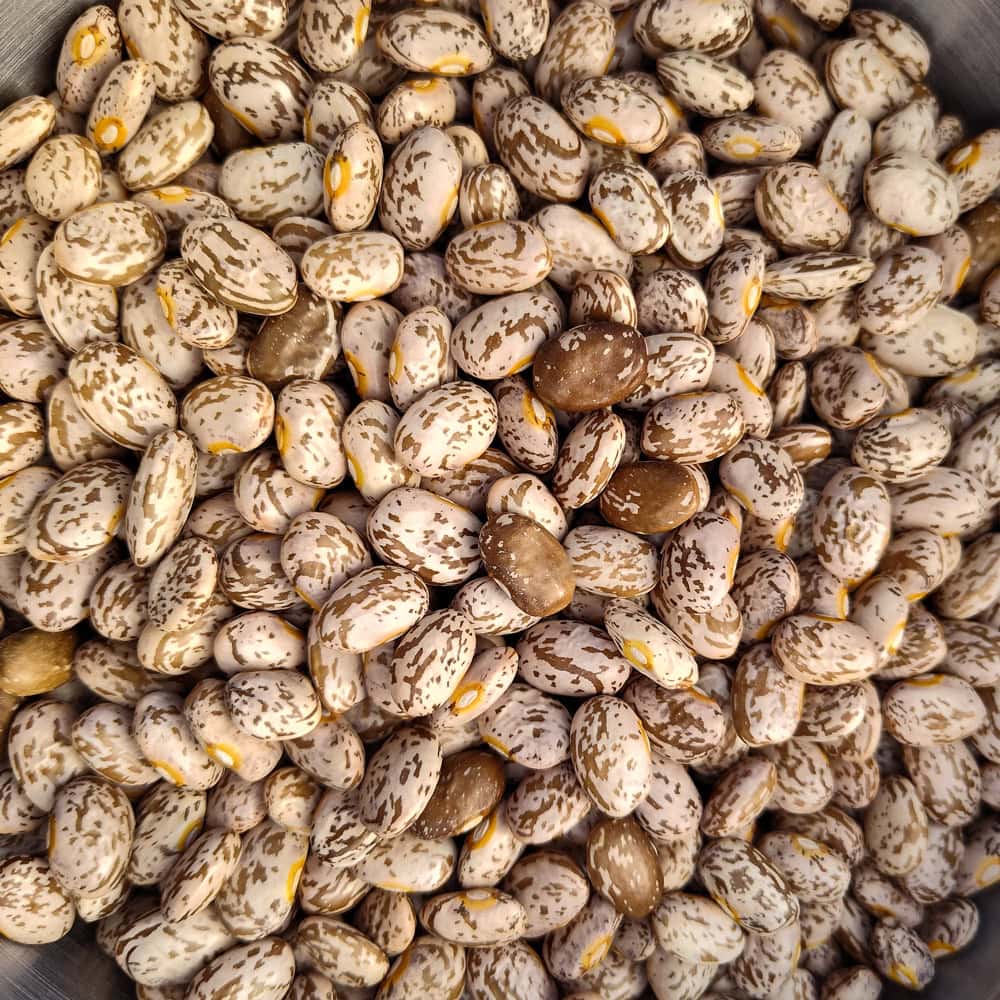
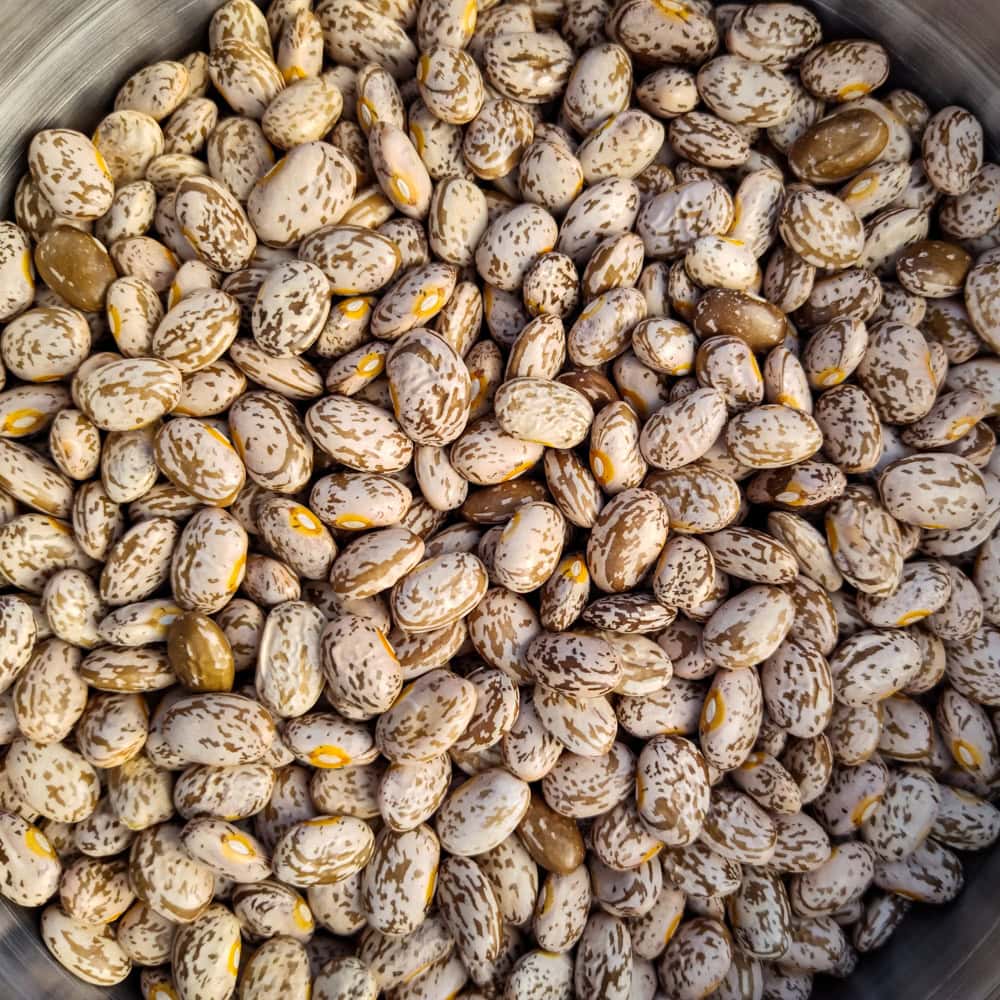
Let’s be honest, if we were stranded on a desert island and could only have one dry bean to grow and eat, it would be pinto beans. Pinto beans were perhaps the only dry bean either of us ever knew growing up in Southern California, where they are a staple ingredient in So. Cal. Mexican cuisine – most often refried into salty gooey goodness and added to burritos. Traditional pinto bean varieties just don’t do very well here in the maritime Pacific Northwest and modern commercial pintos never quite tasted right, so for many years we simply resigned ourselves to refrying various other sorts of short season beans. Then we found Agassiz Pinto, an early maturing variety that tastes like a pinto should and performs well in our PNW climate. Agassiz Pinto is a gourmet quality bean, breaking the stereotype of pintos being boring and ordinary. In 2024, when one of our bean plantings was damaged by seed corn maggots in cool soil, we tilled it in and planted Agassiz Pinto in its place. In spite of being planted in mid-June – three full weeks after the rest of the field – the Agassiz Pinto was the first to be harvested! Agassiz Pinto produces small, flat beans that are the quintessential pinto tan with brown speckles. This northern adapted variety was developed by Rodgers Brothers Seed in Idaho and has been in commercial production in Idaho and central Oregon since the 1990s. Compact bush habit that occasionally sends out short runners. Resistant to Bean Common Mosaic Virus. The seed originally came to us via Prairie Garden Seeds, a farm-direct organic seed company in Saskatchewan, Canada.


| Geographical Origin |
|---|
Direct sow 1″ deep May through June in rows that are 1′ apart. Thin seedlings to 3-6″ spacing. Protect early sowings from frost. Stop irrigating in early August. Harvest beans from pods that are fully dry. Shell by hand, by dancing, or by driving on beans spread on a tarp. Winnow to clean. Test for dryness with a hammer – dry beans shatter.
Seed Saving
Some cross-pollination may occur, but beans mostly self-pollinate. For more info on growing dry beans, check out our blog post at: seedambassadors.org/we-love-growing-dry-beans-you-might-too/
What others are saying
There are no contributions yet.