

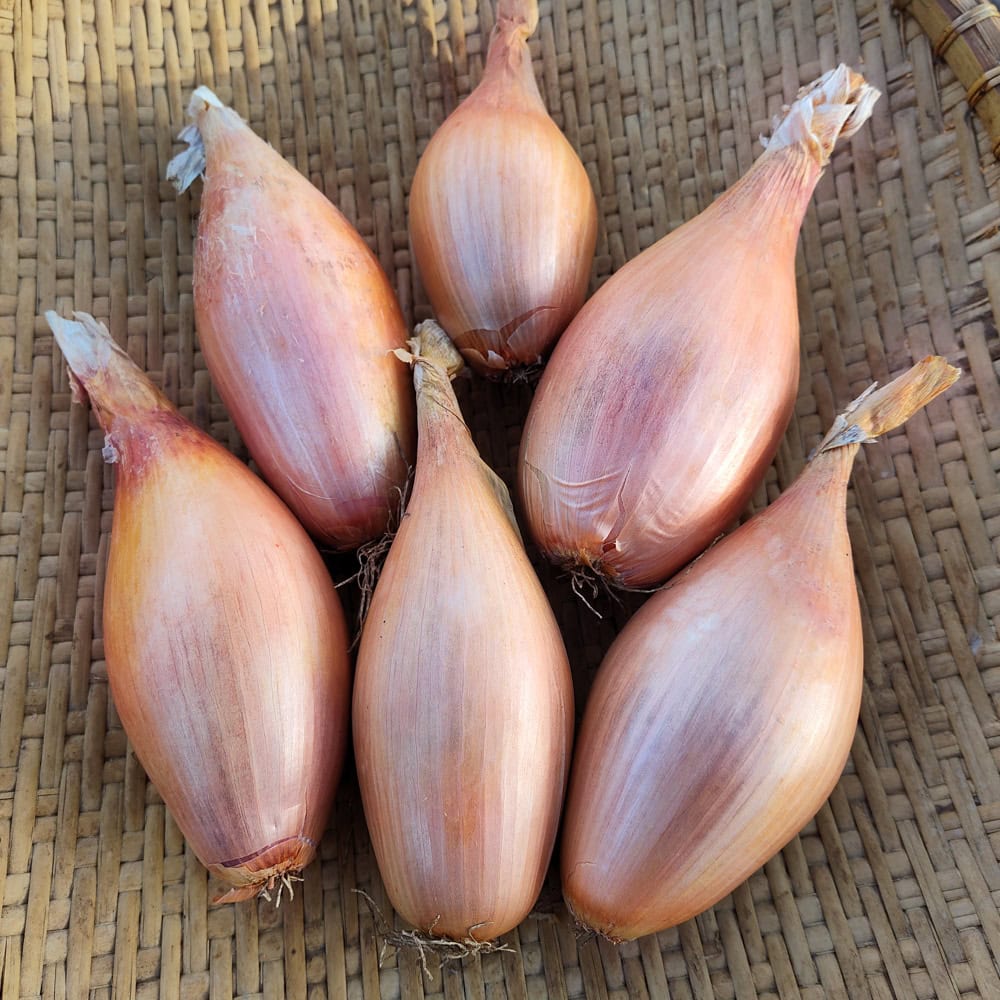

Onion, Zébrune Shallot-Onion (Organic)
Allium cepa. Copper-pink storage/ shallot-onion. 120 days. Long Day.
Large, copper-pink, torpedo-shaped bulbs have sweet and mild flavor and store well. While technically an onion, we use the designation shallot-onion because its appearance and culinary qualities more closely resemble shallots: Narrow rings, high dry matter and excellent storage life, but most importantly – delicate flavor. In France, where the variety is from, this type of onion is known as eschallion, a portmanteau of the French words for shallot and onion. Zébrune Shallot-Onion was an instant crew favorite and we have fun calling them Chicken Legs here on the farm, though due to their size they might more appropriately be called Turkey Legs. Known in France as Cuisse de Poulet (Chicken Leg) du Poitou or Zébrune.
In 2017 we were sent seeds for this variety from a customer in Vermont, the late John Miller of the Old Schoolhouse Plantery (who was also our source for Cilician Parsley and Pigletwillie’s French Black Tomato). At that time, John said the seed that was available in the US was not true to type, and so he had sourced seed directly from France for his farm’s needs. John sent us the extra seed from that shipment in the hopes that we would be able to produce a true-to-type Zébrune that he knew and loved. It’s taken us more than a few years but at long last we are happy to have an abundant crop to share!


| Geographical Origin |
|---|
For bulb onions, sow indoors in flats with good potting soil February through March. Transplant into the garden in April or May, when plants are at least the size of a No. 2 pencil lead. Space 6” in rows that are 1’ apart. Onions benefit from frequent watering and shallow cultivation. Stop irrigating in August. Harvest when stem has shriveled and tipped over.
Seed Saving
To save seed, replant at least 20 onions (to avoid inbreeding) in the second spring. Large, beautiful globe shaped flowers attract pollinators. Cut whole seed heads when they open and show the black seeds. Thresh gently and winnow to remove debris and hollow seeds. Isolate from other Alliums of the same species by at least ½ mile.
What others are saying
There are no contributions yet.