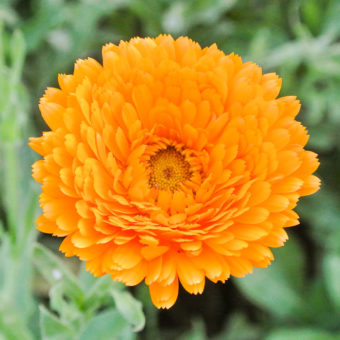
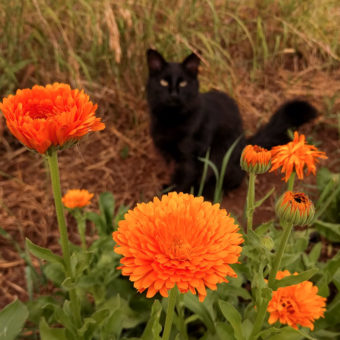
Calendula officinalis. 65-70 days. Perennial in zones 8-10. Fully double, bright orange flowers on 18-24” plants. Erfurter is a preferred variety for commercial production in the US, with larger flowers and a somewhat higher resin content than Resina. Also blooms profusely, but not as prolifically as Resina. Petals can be used to make a natural…
Select options
This product has multiple variants. The options may be chosen on the product page
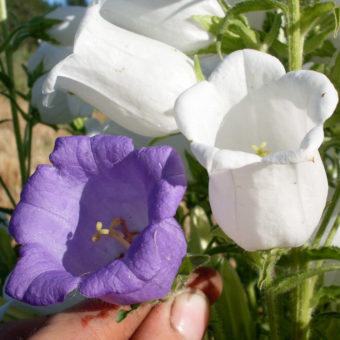
Campanula medium. Biennial. Bell-shaped, 2-3″ flowers are good stuffed or whole in salad. Selected for edible flowers which are purple or white and pleasantly peppery. Biennial that blooms only in its second year, but flowers profusely and is well worth the wait. A type of Canterbury Bells Campanula selected by Tim Peters of Peters Seed…
Select options
This product has multiple variants. The options may be chosen on the product page
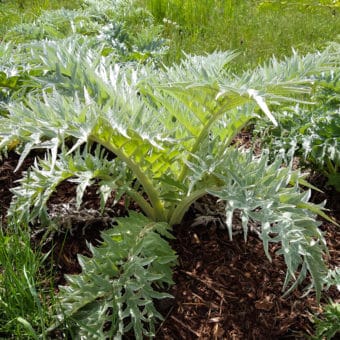
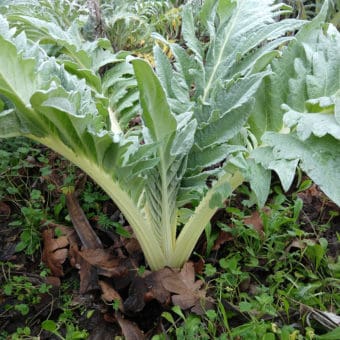
Cynara cardunculus. Perennial in zones 7-10. Related to the artichoke but grown instead for the leaf midribs (technically petioles) that are eaten after blanching. White, thornless leaf midribs grow tall and are extra thick. Vigorous upright growth results in partial self-blanching, giving Plein Blanc Inerme Blanco Cardoon a higher culinary value than more traditional varieties….
Select options
This product has multiple variants. The options may be chosen on the product page
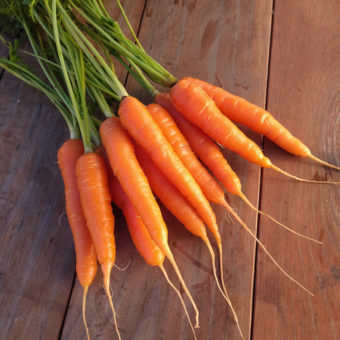
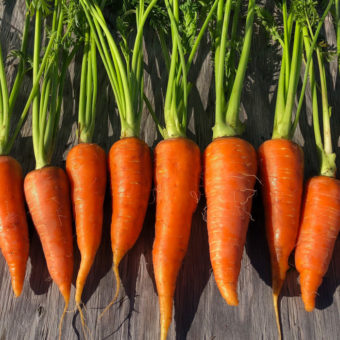
Daucus carota. 55 days. An early improved Nantes type carrot. Unique orange color has almost pinkish undertones. Flavor is what really makes Coral a standout with its delicious sweetness and an aroma to match – perfect for snacking. Coreless, with better tip fill than most OP carrots. European variety introduced to the US by Fedco…
Select options
This product has multiple variants. The options may be chosen on the product page
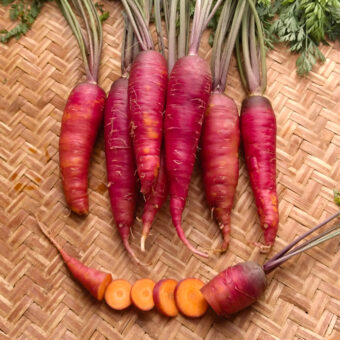
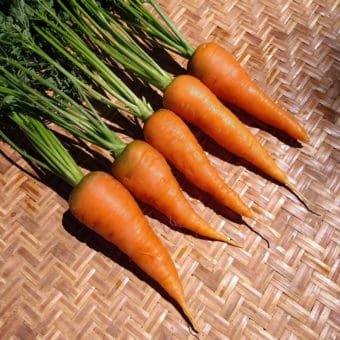
Daucus carota. 65-75 days. Cosmic Purple carrot combines great color with a delicious flavor often only present in orange carrots. Vibrant reddish purple roots have orange interiors. Six to eight inch tapered roots have an appealing shape similar to Danvers type carrots and tolerate heavy soils. Cosmic Purple carrot scored high marks in our trials…
Select options
This product has multiple variants. The options may be chosen on the product page
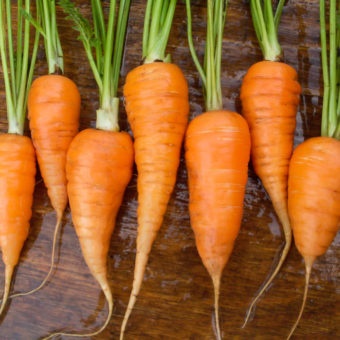
Daucus carota. 70-75 days. With its broad-shouldered, conical, orange roots, Danvers 126 carrot is a garden standby that has been around since 1886. Similar to Red Core Chantenay but less blocky and a little more tender, however not as tender as Nantes types. Good for year round carrot production. Split resistant roots grow to about…
Select options
This product has multiple variants. The options may be chosen on the product page
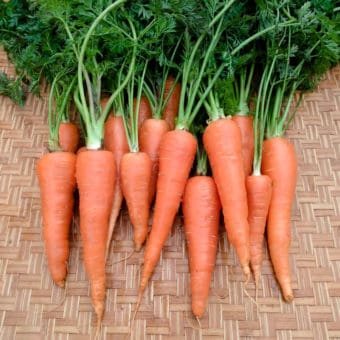
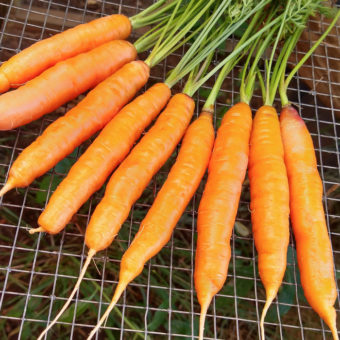
Daucus carota. 60 days. This nantes type carrot is an excellent open pollinated competitor for the hybrids. Delightful, juicy crunch and sweet, mild flavor make it great for fresh eating. Very uniform for an open pollinated variety with bright orange color and good tip fill. Makes attractive carrot bunches at market. Good for spring through…
Select options
This product has multiple variants. The options may be chosen on the product page
Daucus carota. 70 days. The ultimate carrot for winter cultivation and storage. Wide shoulders, dense flesh, and solid carrot flavor make it a preferred variety for processing and great for bulk and/or wholesale as the poundage adds up quickly. Grows well in heavy soil, strong tops and wedge shape make for easy harvest. This variety…
Select options
This product has multiple variants. The options may be chosen on the product page
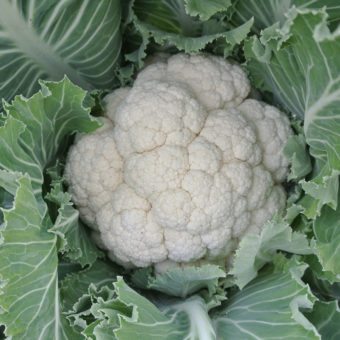
Brassica oleracea. 200+ days. Overwintering cauliflower is one of the best kept secrets of the vegetable world. So tasty and so productive, it comes on right when it is needed during the spring hunger gap. Living in the Pacific Northwest, which is one of the few places on the planet where it can be easily…
Select options
This product has multiple variants. The options may be chosen on the product page
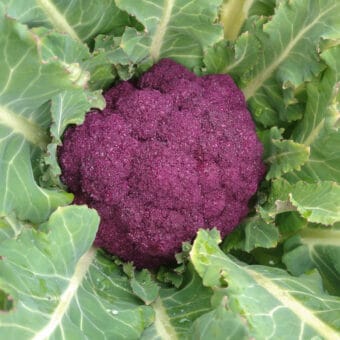
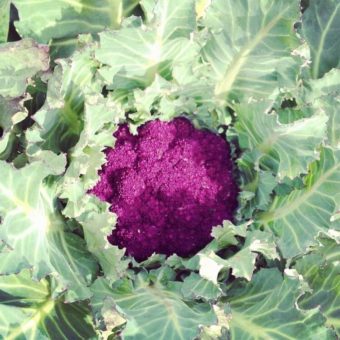
Brassica oleracea. 200+ days. This overwintering purple cauliflower is another great crop for the hunger gap of late spring. Purple Cape, when sown in June or July, produces deep purple heads the following February through March. Produces much larger heads and more food than overwintering purple sprouting broccoli, and we are so happy to be…
Select options
This product has multiple variants. The options may be chosen on the product page
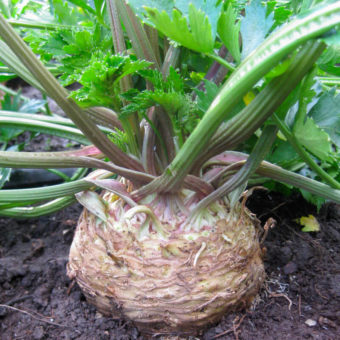
Apium graveolens. 110 days. A great old-fashioned celeriac from England. These big, vigorous roots are a little darker than modern varieties both inside and out, and the leaf stalks have a reddish color. Most modern celeriac has been bred to have a bright white interior, which is better for looks. Unfortunately, the volatile compounds that…
Select options
This product has multiple variants. The options may be chosen on the product page
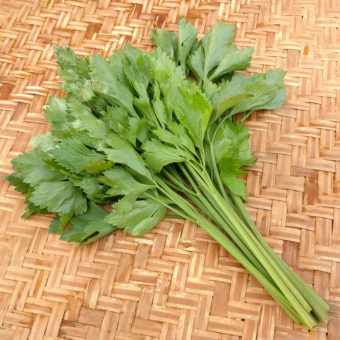
Apium graveolens. 50-70 days. An Asian type that is similar to Chinese celery, but from Thailand. Chai Thai celery has long stems with strongly flavored large, jagged leaves that have a nice golden-green color. Asian celery is often used as a flavoring herb in stews, soups and stir fry dishes. The thin stems are rather…
Select options
This product has multiple variants. The options may be chosen on the product page
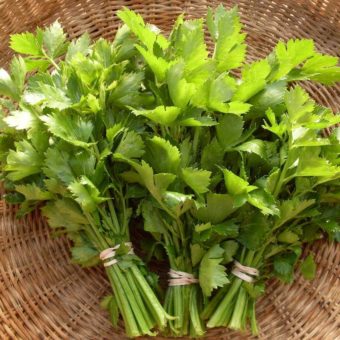
Apium graveolens. 70 days. Light-green leaf cutting celery. Grows to 18” and is great in mirepoix and soups. Stems are also usable, but much smaller than those of stalk celery. The flavor packs a punch that is most suitable for cooking; a little goes a long way. This vigorous biennial leaf makes a great addition…
Select options
This product has multiple variants. The options may be chosen on the product page
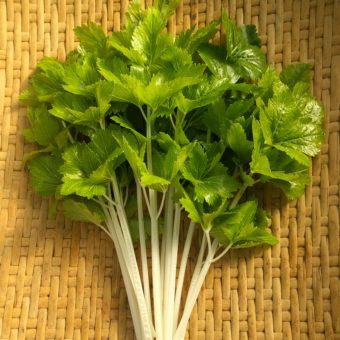
Apium graveolens. 70 days. Bright-green, aromatic leaves atop long, skinny, white stems give White Queen a stark visual contrast from the classic western stem celery. Thrives in cool fall weather, overwinters easily, and sometimes grows back vigorously as a second and third year perennial. This leaf celery is a Chinese variety with a strong flavor…
Select options
This product has multiple variants. The options may be chosen on the product page
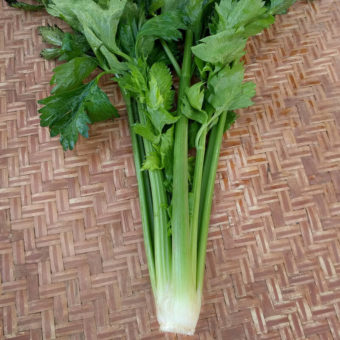
Apium graveolens. 80-100 days. The classic American celery! An improved Tall Utah type, Ventura celery is named after the town Andrew grew up in. When he was a kid riding his bike around Ventura, California, he saw many fields of celery growing interspersed with strawberry fields and lemon orchards. Once one of the most common…
Select options
This product has multiple variants. The options may be chosen on the product page
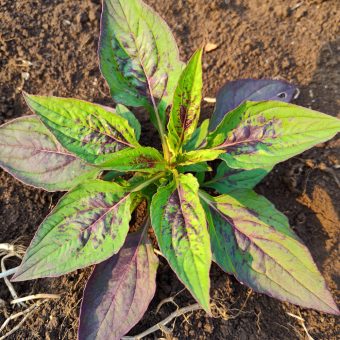
Celosia argentea var. spicata. 60-70 days. An important leafy green from Nigeria and West Africa that is becoming more well known in North America as an easy to grow, culturally significant food. Used in a similar fashion to Callaloo amaranth greens and is similarly heat resistant. Culinary quality is best before flowering and when leaves…
Select options
This product has multiple variants. The options may be chosen on the product page
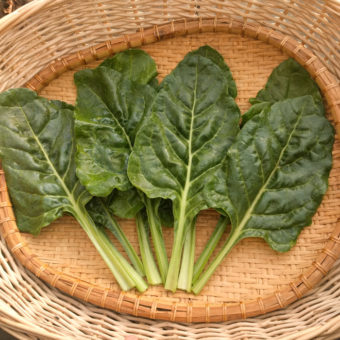
Beta vulgaris. 30 days baby, 50 full. Traditional Tuscan-type, green leaf chard often simply called Bietola. The sweetest chard we have ever tried. Young leaves have little to no oxalic acid flavor at all. Older leaves have more standard chard flavor, yet are still uniquely mild and tasty. Leaves tend to be smaller with thinner…
Select options
This product has multiple variants. The options may be chosen on the product page
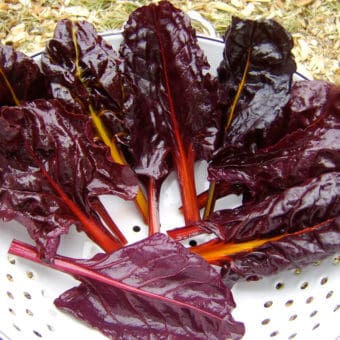
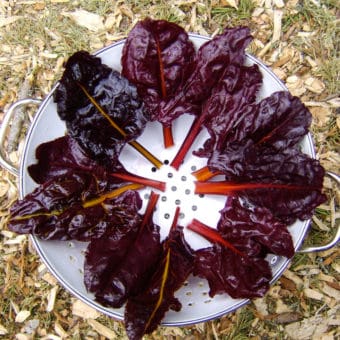
Beta vulgaris. 30 days baby, 60 full. A uniquely dark-leaved chard. Most plants have leaves that are incredibly deep dark burgundy; we have been selecting for dark leaves with almost luminescent yellow-orange midribs. Classic chard flavor, good tolerance to cold and wet conditions. Both color and flavor intensify as plants mature; baby leaves are milder…
Select options
This product has multiple variants. The options may be chosen on the product page
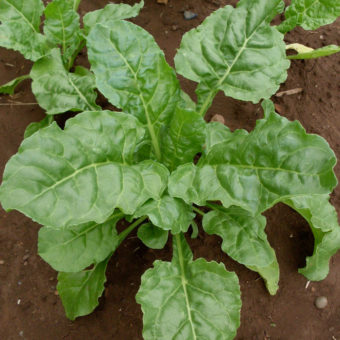
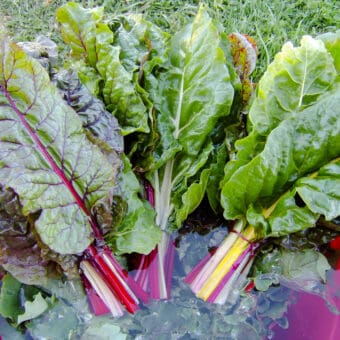
Beta vulgaris. 30 days baby, 60 full. This selection of Rainbow chard is a show stopper in the garden, at farmer’s market, and on the table. Vibrant colors range from dark red, through the spectrum to hot pink, orange, yellow, and white. Leaves can be incorporated raw into salads when young or cooked when older….
Select options
This product has multiple variants. The options may be chosen on the product page
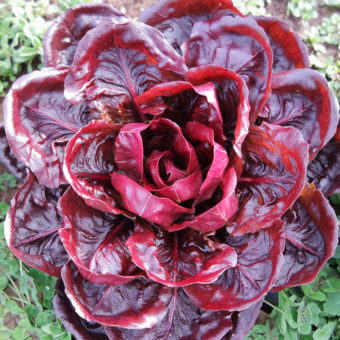
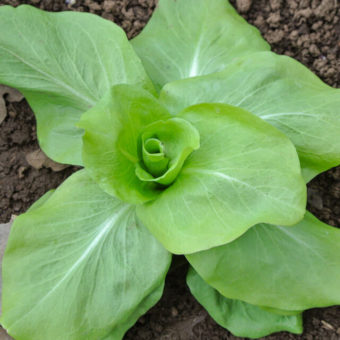
Cichorium intybus. Rosette type. 60 days. Red Grumolo type chicory, cold hardy and beautiful. Forms a beautiful rosette in winter through spring that is so pretty it could be used as a boutonniere. Also great harvested young for salad mix and as cut-and-come-again loose leaves. Shari Sirkin of Dancing Roots Farm in Troutdale, Oregon, tells…
Select options
This product has multiple variants. The options may be chosen on the product page
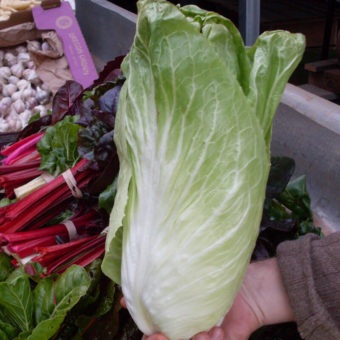
Cichorium intybus. Sugarloaf type. 80 days. Tall, green romaine-like “loafs” are sweet and crunchy. Usually hardy here in the Pacific Northwest all winter long, although temperatures below 20°F may damage heads. The Borca selection has had much better consistency and hardiness for us in our trials than other strains of sugarloaf. It became a staple…
Select options
This product has multiple variants. The options may be chosen on the product page
Cichorium intybus. Rosette type. 35 days leaf; 60 head. Trieste Sweet is a cut-and-come-again chicory that is usually broadcast sown, and harvested at baby leaf stage for use in salad mixes. Known for regrowth after harvest. Young leaves are smooth with round tips, thin stems that have almost no ribbing, and a mild sweet flavor…
Select options
This product has multiple variants. The options may be chosen on the product page
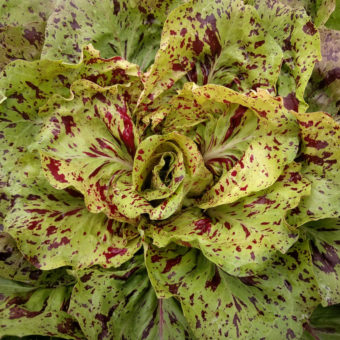
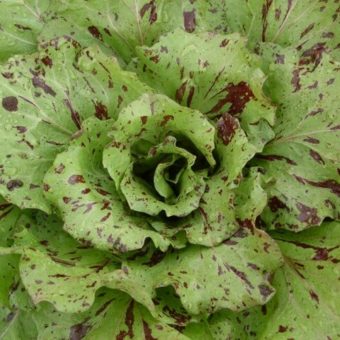
Cichorium intybus. Loose heading type. 70 days. Chicories are becoming more popular in the Pacific Northwest with castelfranco and sugarloaf leading the charge. Why? Because they’re delicious! Variegata di Castelfranco is a big heading chicory with lots of bright colors, mostly green with red speckles. If planted in July or early August, it will head…
Select options
This product has multiple variants. The options may be chosen on the product page
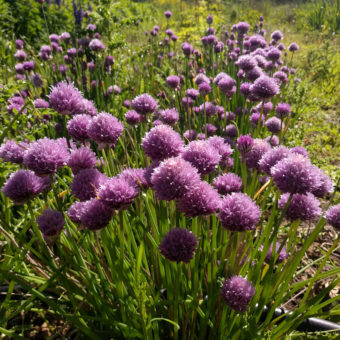
Allium schoenoprasum. Perennial in zones 3-10. Produces bunches of dark green, pungent, onion flavored leaves that are very versatile in the kitchen. Plants grow to about 12″ tall. Very hardy plants withstand neglect, can grow in full sun to part shade, and are great for containers. In midsummer, plants produce little, light purple, globeshaped flowers…
Select options
This product has multiple variants. The options may be chosen on the product page
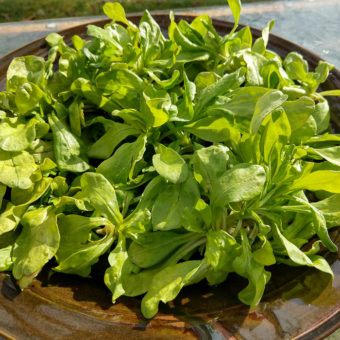
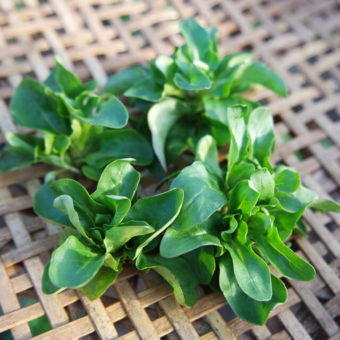
Valerianella sp. 55 days. Nüssler is the common name for corn salad in German-speaking Switzerland, where we picked up this tasty and nutritious gem on our Seed Ambassadors travels many years ago. Light-green (almost golden) leaves have very mild flavor and form a small rosette which is harvested whole or occasionally as cut-and-come-again salad greens…
Select options
This product has multiple variants. The options may be chosen on the product page
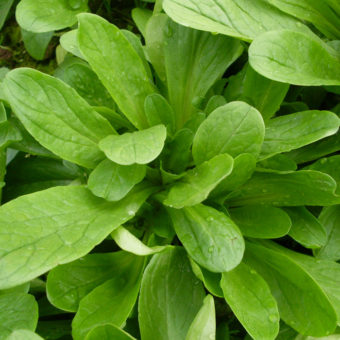
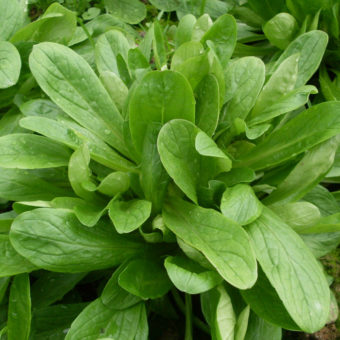
Valerianella locusta. 35 days. Granon is a standby variety of corn salad that grows well year-round in cool climates, but is best known as a winter salad green for both outdoor and indoor production. Plants produce a small rosette (think baby greens size) that may be harvested whole or by cutting individual leaves for cut-and-come-again…
Select options
This product has multiple variants. The options may be chosen on the product page
Valerianella locusta. 45 days. Winter hardy, yet tender and mild flavored salad green that has a nice subtle hint of nuttiness with a floral perfume. Plants form a small rosette of strap-shaped, light-green, 4″ leaves. Usually grown autumn through spring, the very hardy plants easily overwinter in our field. Piedmont is a large seeded, larger…
Select options
This product has multiple variants. The options may be chosen on the product page
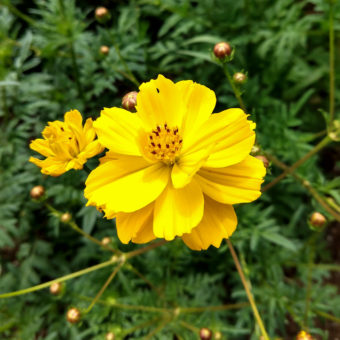
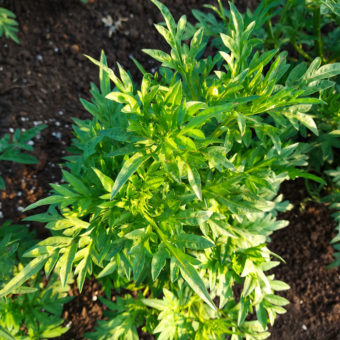
Cosmos sulphureus. Bright yellow, 2-3″ wide flowers are like little stars in the garden. Can quickly grow into a hedge covered in yellow blooms, which the bees love. Bushy plants grow to 4’ wide and tall, and bloom all season long in the Pacific Northwest. In other latitudes, or when planted mid summer, Kenikir cosmos…
Select options
This product has multiple variants. The options may be chosen on the product page
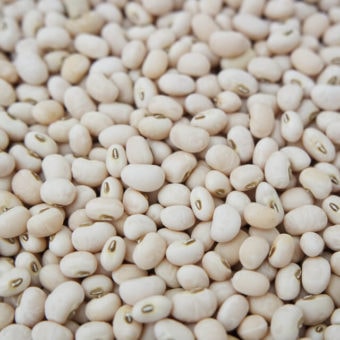
Vigna unguiculata. White. 65 days fresh, 90 dry. An excellent, productive, early variety of white seeded cowpea. Beans have a creamy texture and do not require soaking before cooking. Pods are solid and hold well above the ground on compact upright bushes so they can take some wet weather and not succumb to mold. Beautiful…
Select options
This product has multiple variants. The options may be chosen on the product page
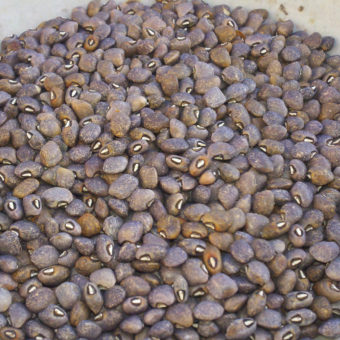
Vigna sinensis. Grey Speckled. 75 days fresh, 95 dry. We have tried growing many varieties of cowpea / black-eyed pea / crowder pea through the years and had never experienced a harvest worth writing about until 2014 when we gave Grey Speckled Palapye a try and finally, a cowpea worthy of praise in our growing…
Select options
This product has multiple variants. The options may be chosen on the product page
Lepidium sativum. 30 days. Very large, broad leaves for a garden cress, with nice wavy edges. Fairly slow to bolt. Good hot mustard flavor reminiscent of wasabi without too much spice. Makes a substantial addition to salad mix. Dutch Broadleaf cress is great on sandwiches, and we especially enjoy its peppery addition to BLTs. An…
Select options
This product has multiple variants. The options may be chosen on the product page
Lepidium sativum. 20 days. A delightfully pungent addition to salads, Greek Cress is a type of garden cress (aka, pepper grass) that is easy to grow and thrives in cool weather. Best when young, its delicate, frilly leaves contribute a hot mustardy flavor and it’s a great green to use for cut-and-come-again salads. May also…
Select options
This product has multiple variants. The options may be chosen on the product page