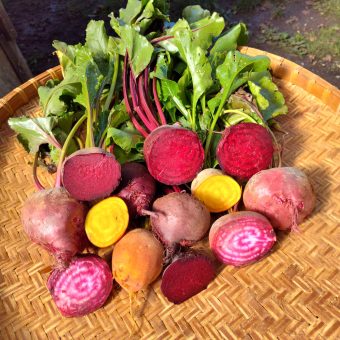
Beta vulgaris. 55-90 days. Grow a diverse rainbow of beets in your garden with our Radicle Rainbow Beet Blend! This radicle (and radical!) mix includes everything a person could want in beets – they’re beautiful, delicious, and nutritious! It’s a great way to sample many varieties to find your favorite, or stick with the mix…
Select options
This product has multiple variants. The options may be chosen on the product page
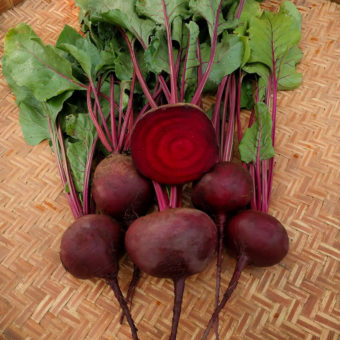
Beta vulgaris. Round Red. 60 days. Round, red roots with red leaf stems and green leaves. Vigorous and uniform with smooth skin and tall tops, Shiraz is a good choice for market growers and home gardeners alike. Not quite as sweet as Lutz Green Leaf, but still quite tasty. Young leaves make a great addition…
Select options
This product has multiple variants. The options may be chosen on the product page
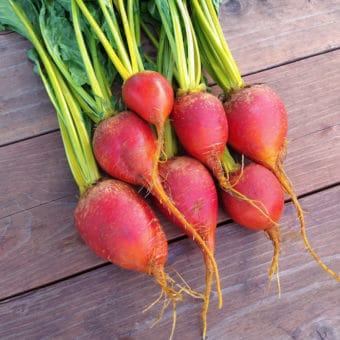
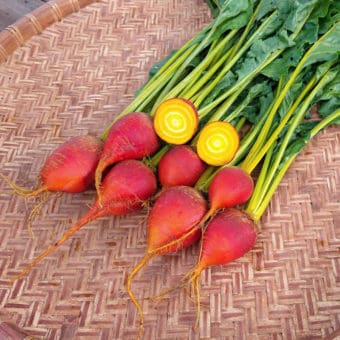
Beta vulgaris. Round Golden. 55 days. Touchstone Gold beets are vibrant orange on the outside with a golden yellow interior and green leaves. Color holds well through cooking and doesn’t bleed or stain as with traditional red varieties. Flavor is delightfully sweet and not overly earthy. Touchstone Gold is an improved variety of gold beet…
Select options
This product has multiple variants. The options may be chosen on the product page
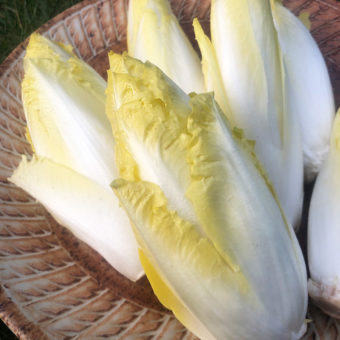
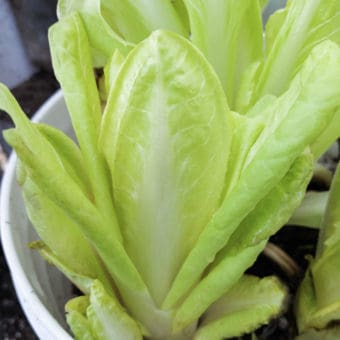
Cichorium intybus. Belgian / forcing type. 90 days for root; up to 260 days for forcing. Delicious Belgian / Witloof type endive, that can easily be forced in simple production conditions. Belgian endives are grown during the main season (direct sown in June). Roots are then dug in early fall and forced in darkness (either…
Select options
This product has multiple variants. The options may be chosen on the product page
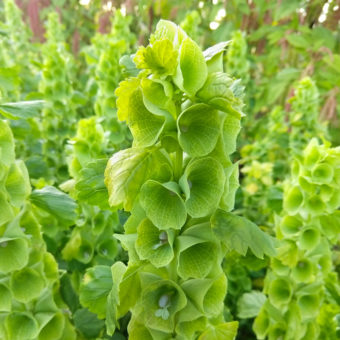
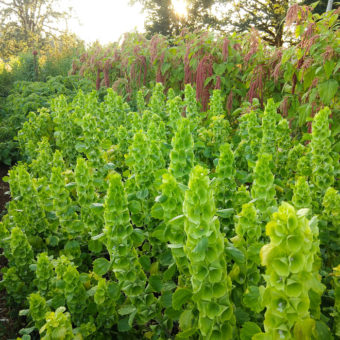
Moluccella laevis. 90 days. A garden classic that has been featured in bouquets since before green flowers were cool, Bells of Ireland has been cultivated since the 1500s! Highly branched plants produce many spires of lime green, bell-shaped “flowers” that grow to 18” to three feet tall. The actual flowers are tiny and white, and…
Select options
This product has multiple variants. The options may be chosen on the product page
$166.00Original price was: $166.00.$160.00Current price is: $160.00.
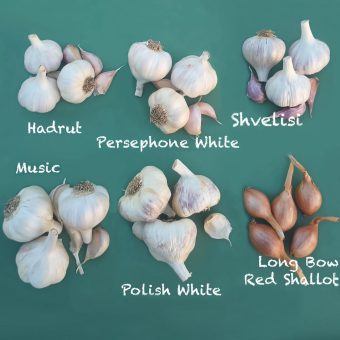
Hardneck and Softneck garlic types, and Shallots An easy choice for those who want to plant a bunch of garlic and shallots and can’t decide which varieties to grow. The Bountiful Bundle of Garlic and Shallots features 1 lb quantities of each year’s most bountiful garlic and shallot varieties. For 2025, this collection includes Hadrut…
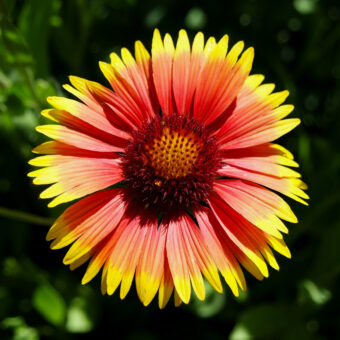
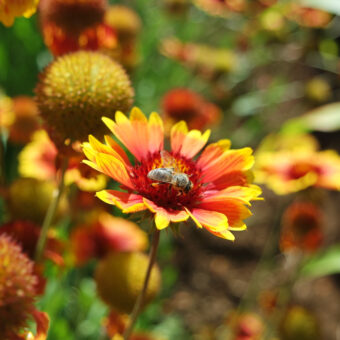
Gaillardia arisata. Perennial in zones 3-10. Beautiful, cheery, daisy-like flowers on long, sturdy stems are a great, longlasting cut flower. Blooms over a long season – even into November or December if autumn is mild. Flowers are red-orange in the center, petals have yellow tips. After each blossom is done flowering, the seed heads make…
Select options
This product has multiple variants. The options may be chosen on the product page
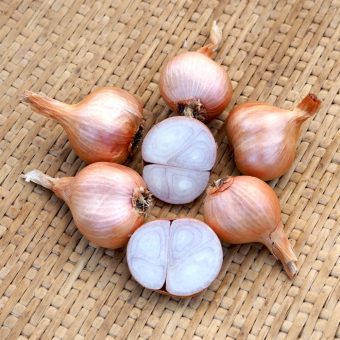
Allium cepa. 280 days (fall planted from bulbs as pictured). Blossom Shallot produces large classic shallots with a round bulb shape that is a nice variation from the other shallots we offer. Bulbs have tan skins with light pink interiors. The flavor can be described as sweet and mild for a shallot, with a rich…
Select options
This product has multiple variants. The options may be chosen on the product page
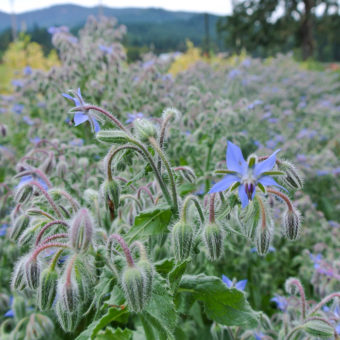
Borago officinalis. Borage is a traditional European herb used medicinally for centuries and as a flavoring for soups and drinks. Little blue flowers are perfect when added to salad, bringing a sweet floral note. Fuzzy leaves have an earthy cucumber taste, considered moist and cooling. We make an alcohol extract out of the leaves and…
Select options
This product has multiple variants. The options may be chosen on the product page
$105.50Original price was: $105.50.$99.50Current price is: $99.50.
Hardneck and Softneck garlic types, and Shallots An easy choice for those who want to plant a bunch of garlic and shallots and can’t decide which varieties to grow. The Bountiful Bundle of Garlic and Shallots features 1/2 lb quantities of each year’s most bountiful garlic and shallot varieties. For 2025, this collection includes Hadrut…
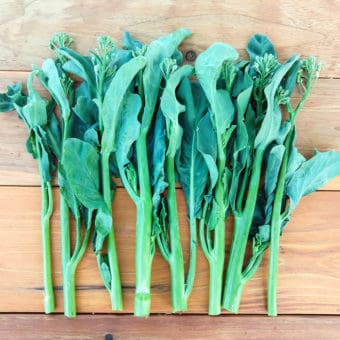
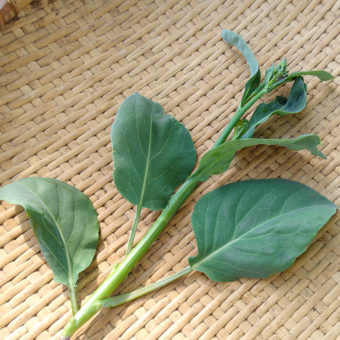
Brassica oleracea. 45-60 days. Our favorite variety of Chinese broccoli chosen from trials that included eight contestants. We like Blue Star’s moderately thick stems, incredible flavor, and easy-to-grow nature. Small plants send up stems up to 1″ thick, with small broccoli-like clusters on top. Due to the small stature, Gai Lan should be grown at…
Select options
This product has multiple variants. The options may be chosen on the product page
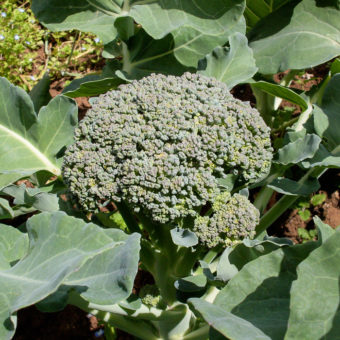
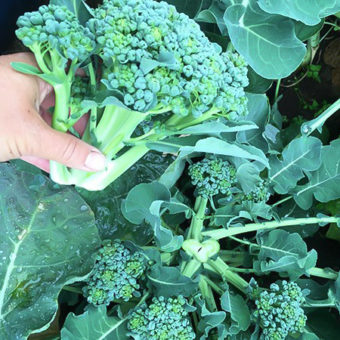
Brassica oleracea. 55-70 days. A great open pollinated broccoli bred in Oregon by plant breeder Dr. Alan Kapuler of Peace Seeds. Nutribud is the broccoli to grow for flavor. The sweetest, richest and possibly the most nutritious broccoli for spring and fall. Deep-green florets, central head and prolific side shoots make this an excellent variety…
Select options
This product has multiple variants. The options may be chosen on the product page
Brassica oleracea. 55 days. A heat-tolerant, small heading broccoli similar to broccolini. Where it really shines is not in its initial small head, but in the endless tasty side shoot production. The leaves are as delicious as the tender green heads and sweet stems. Unique to the world of broccoli varieties, Piracicaba’s small shoots and loose…
Select options
This product has multiple variants. The options may be chosen on the product page
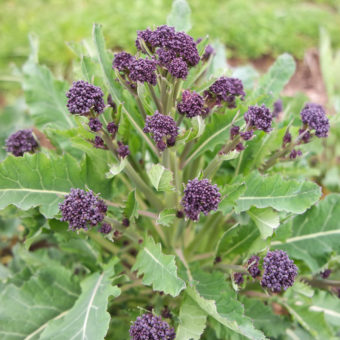
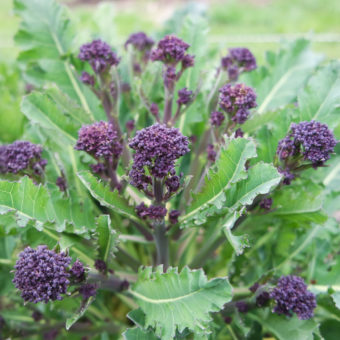
Brassica oleracea. 210-240 days. Overwintering purple sprouting broccoli (PSB) is a very special treat for mild winter climate zones. Along with overwintering cauliflower, PSB is a superb food source during the hunger gap of March – April (at least for those of us whose winters do not usually drop below 15°F). With clusters of vibrant…
Select options
This product has multiple variants. The options may be chosen on the product page
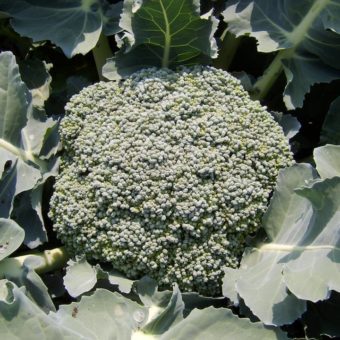
Brassica oleracea. 50-70 days. With its sublime excellent blue-green color, Umpqua looks delicious even from a distance. The robust plants produce 6-8” heads, and have good side shoot production. Early to size up from spring planting yet resists premature bolting. Beautiful and stress tolerant, especially for an open pollinated variety. This spring and fall broccoli…
Select options
This product has multiple variants. The options may be chosen on the product page
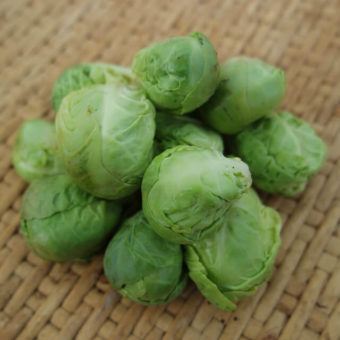
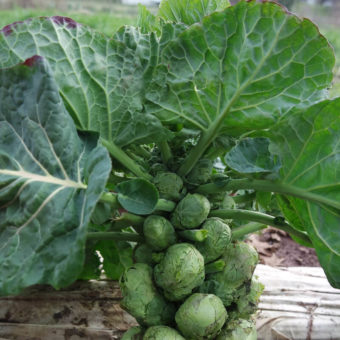
Brassica oleracea. Green. 180-260 days. One of the most reliable, easy-to-grow open pollinated Brussels sprout varieties out there. Firm, sweet, dark green sprouts form on plants that grow to 3½’. We trialed every open pollinated Brussels sprout we could find; Darkmar 21 was the obvious mid-season choice because of its consistent large sprout production and…
Select options
This product has multiple variants. The options may be chosen on the product page
Brassica oleracea. Green. 100-200 days. Forgot to sow your Brussels sprouts in spring? All is not lost! With Early Half Tall, you can sow in June and still get a crop of sprouts by autumn. For a good early rotation of this winter garden delight, sow in March or April – sprouts are harvestable as…
Select options
This product has multiple variants. The options may be chosen on the product page
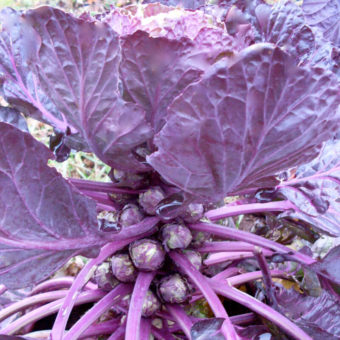
Brassica oleracea. Red. 210-260 days. Vigorous 3’ plants form 1-2” sprouts in fall and winter when transplanted into the field May to early July. Sweet, nutty flavor especially after frost when the plants turn a deeper red/purple. Sprouts stay purple when cooked. In our opinion, one of the few good open pollinated red Brussels sprouts….
Select options
This product has multiple variants. The options may be chosen on the product page
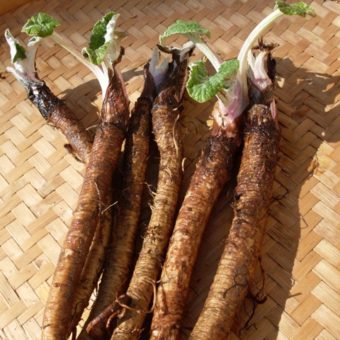
Arctium lappa. A variety originating in Okinawa, an island of southern Japan. The people of Okinawa are known for their long lives and health, which burdock is believed to play a part. Often cooked in soups or pickled, it is known for its healing properties and high vitamin content. The burdock root’s ability to penetrate…
Select options
This product has multiple variants. The options may be chosen on the product page
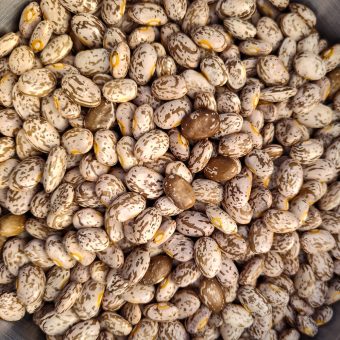
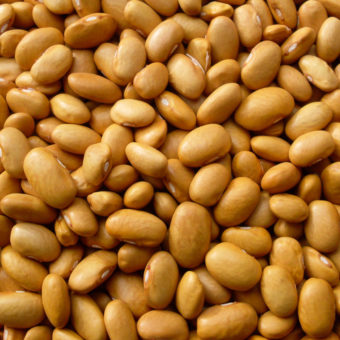
Phaseolus vulgaris. Tan Speckled. 88 days. Let’s be honest, if we were stranded on a desert island and could only have one dry bean to grow and eat, it would be pinto beans. Pinto beans were perhaps the only dry bean either of us ever knew growing up in Southern California, where they are a…
Select options
This product has multiple variants. The options may be chosen on the product page
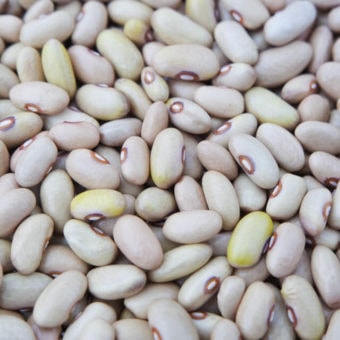
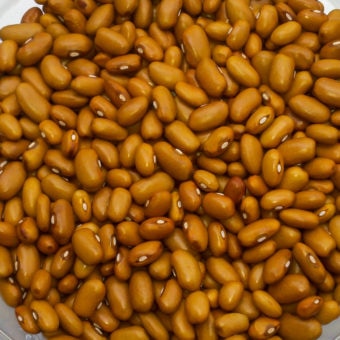
Phaseolus vulgaris. Yellow/Tan. 90 days. Who would have thought that there was an Oregon Coast heirloom dry bean?! We thought it must be good because growing dry beans along the cool, damp Oregon coast is not easy. Not named for the Beers Family folk band of the 1960s, and not because it makes you thirsty,…
Select options
This product has multiple variants. The options may be chosen on the product page
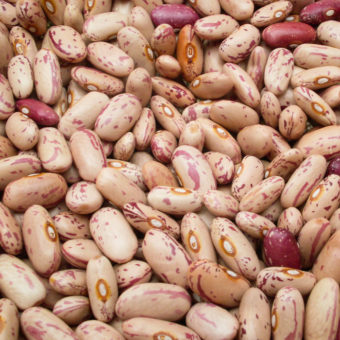
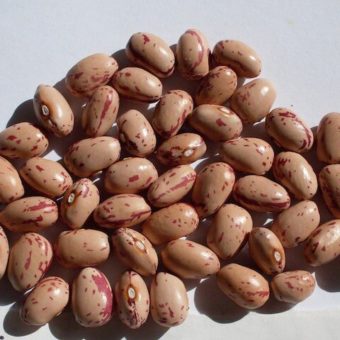
Phaseolus vulgaris. Tan Speckled. 90 days. Beautiful, classic borlotti bean with an elongated shape. Borlotto del Valdarno beans are tan with maroon speckles and stripes. The color pattern is similar to some horticultural and cranberry beans. Delicious delicate flavor perfectly suited to pasta e fagioli (aka, pasta fasul / fazool), the classic Italian pasta and…
Select options
This product has multiple variants. The options may be chosen on the product page
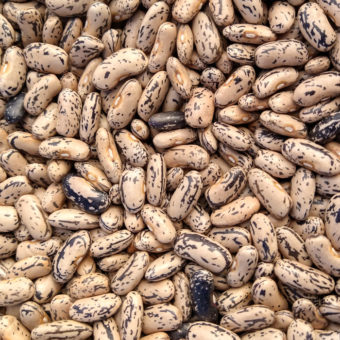
Phaseolus vulgaris. Tan Speckled. 90 days. Wonderful early, very high yielding dry bean. Pods are mottled with dark blue. Seeds resemble a pinto bean but with blue speckles instead of brown. Excellent tasting as a dry bean, somewhere between a kidney and pinto in flavor. Used in England as a snap bean, but we find…
Select options
This product has multiple variants. The options may be chosen on the product page
Phaseolus vulgaris. Red Speckled. 85 days. Cool weather tolerant, small bushes loaded with pods. Early Warwick produces stocky bushes that yield heavy with small round, dark-red mottled beans. Early enough to mature in England, where it is from. Also very reliable here in Oregon. It was usually the first dry bean we would bring to…
Select options
This product has multiple variants. The options may be chosen on the product page
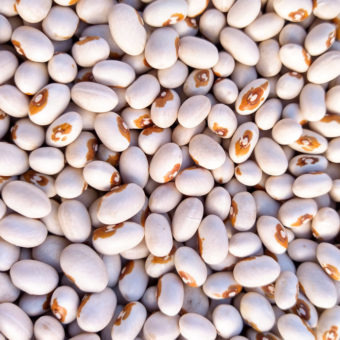
Phaseolus vulgaris. Tan Speckled. 90 days. A favorite throughout the Northeast for baked beans and hearty winter soups. Used in the South as an alternative black-eyed pea. We frequently substitute Kenearly Yellow Eye for cannellini beans in our favorite recipe – kale and cannellinis. Beans hold their shape when cooked, or can be blended down…
Select options
This product has multiple variants. The options may be chosen on the product page
Phaseolus vulgaris. Golden Brown. 80 days. A light golden-brown, small dry bean rivaling other beans for early maturity. With its mild and creamy flavor, Nez Perce is a good all-purpose bean and is especially delightful refried. Very reliable and easy to grow in cool summer or short season areas. Short, half-runner bush plants show indeterminate…
Select options
This product has multiple variants. The options may be chosen on the product page
Phaseolus vulgaris. Brown. 90 days. Small, round brown bean with a mellow flavor. Traditionally used in Swedish sweet and sour bean stew (made with molasses and vinegar), and we enjoy it in Boston baked beans. Brown beans have been a staple in Sweden for hundreds of years. Though they were once grown in several areas…
Select options
This product has multiple variants. The options may be chosen on the product page
Phaseolus vulgaris. Rosy Speckled. 90 days. Very productive and early bean. Beautiful rosy red, oblong beans with dark stripes and speckles. Said by growers in Italy to have a rich delicious flavor, pairing well with other strong flavors such as garlic, sage and rich fruity olive oil. We agree and love to use it as…
Select options
This product has multiple variants. The options may be chosen on the product page
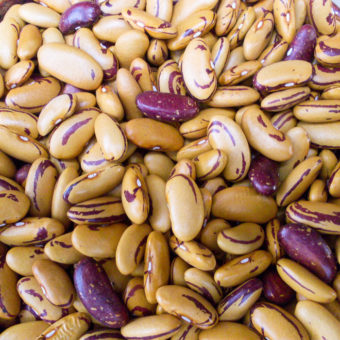
Phaseolus vulgaris. Tan Speckled. 90 days. This was our most popular dry bean at farmer’s market. Stunningly beautiful, the large golden-orange beans are streaked with maroon and really catch the eye. But what keeps folks coming back for more is the eating quality: the tender skins nearly disappear, leaving a creamy and smooth texture perfect…
Select options
This product has multiple variants. The options may be chosen on the product page
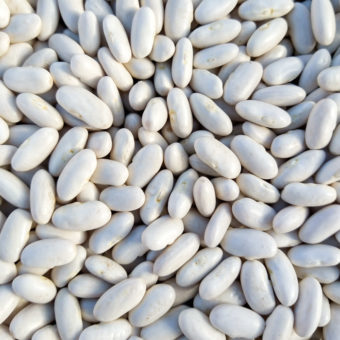
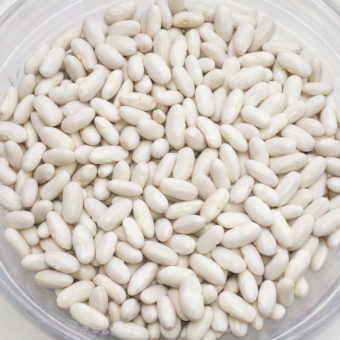
Phaseolus vulgaris. White. 95 days. When we grew dry beans for farmer’s markets our customers frequently asked us for cannellini beans and we know why: the pure white beans are delicious and creamy, yet hold their texture well when cooked. They pair amazingly well with our favorite vegetable, kale, and shine in minestrone, one of…
Select options
This product has multiple variants. The options may be chosen on the product page
Phaseolus vulgaris. Tan with Red stripes. 90 days. A round borlotti/cranberry type. Good dry or as a fresh shelling bean that is early and cold tolerant. Plants are half-runner and somewhat sprawling. We recommend a trellis for small spaces, but plants can be left to sprawl if you have room. Has a classic smooth borlotti bean…
Select options
This product has multiple variants. The options may be chosen on the product page
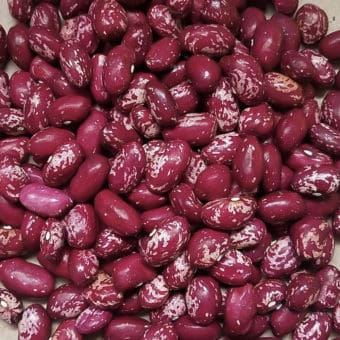
Phaseolus vulgaris. Purple Speckled. 95 days. Whipple is on our short list of favorite bean varieties that are adapted to the Pacific Northwest. Great rich flavor. We think it is especially good in chili and paired with copious amounts of garlic. Vigorous bush plants may have short runners. The beans themselves resemble Early Warwick but are…
Select options
This product has multiple variants. The options may be chosen on the product page