Dry farming is often described as crop production without irrigation during a dry season, usually in a region that receives at least 20 inches (50 cm) of annual rainfall, and utilizes the moisture stored in the soil from the rainy season. It is important to note that this doesn’t simply mean these crops can be planted and then neglected: Dry farming draws upon a suite of practices to efficiently utilize soil moisture to support crop growth during a dry season. Through selection of appropriate locations, crop varieties, and water-wise farming strategies, dry farming can produce nutritious food without relying on irrigation.
Dry Farming Basics
Site Selection – Deep soils with high available water-holding capacity retain more water for crops.
Variety Selection – Dry farm-adapted or otherwise drought-tolerant crops will perform better.
Timing – Early planting allows for plants to get established with enough moisture in the topsoil.
No irrigation – Encourages plant roots to penetrate deeper into the soil to access moisture.
Lower planting density and diligent weed control – Reduces plant competition for water.
Shallow cultivation or mulching – Reduces evaporative water loss from the topsoil.
Microclimate management – Windbreaks and partial shade can reduce drought stress.
Improve soil health – Increase soil organic matter and minimize soil disturbance to improve soil water-holding capacity.
The varieties listed here on our website as ‘Dry Farming Recommended’ and others in the Dry Farming Institute Seed Directory have been identified as top-performing in terms of yield, quality and flavor in dry farming trials in Western Oregon. These varieties have demonstrated strong potential for adaptation to dry farming, but they will also perform well when irrigated. The climate and soil of some locations may not be conducive to successful dry farming.
While we are all growing in different climates and soils, the strategies and practices that support dry farming in seasonally-arid climates like ours in the maritime Pacific Northwest may be applied in other locations as well to help grow food with less water. Whether you are a gardener trying to use less municipal water, or a farmer seeking to reduce reliance on irrigation, starting with dry farming adapted crop varieties is an important first step as you experiment with growing food with less water.The Dry Farming Institute (DFI) is a 501(c)3 nonprofit organization that engages growers and communities in collectively adapting to less water. DFI has supported ongoing variety trials in Western Oregon since their inception in 2019 to help identify dry farm-adapted crop varieties and increase awareness and availability of these varieties through collaboration with seed stewards and companies like us (Adaptive Seeds)!
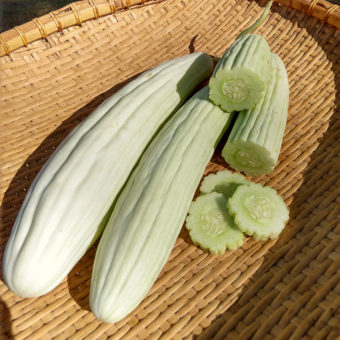
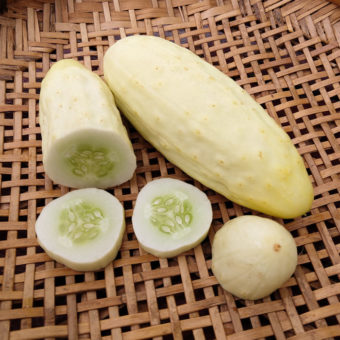
Cucumis melo. Armenian Slicing. 65 days. Light-green, ridged cucumber-like fruit are prolific with a mild flavor that is never bitter. Thin skin does not need to be peeled. Known commonly as Armenian cucumber in North America. Tortarello Abruzzese Bianco produces high yields and one-of-a-kind style. When sliced, ridges on the surface produce pretty cross sections…
Select options
This product has multiple variants. The options may be chosen on the product page
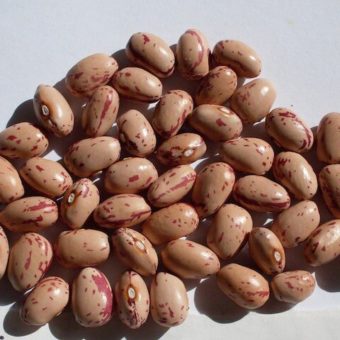
Phaseolus vulgaris. Tan with Red stripes. 90 days. A round borlotti/cranberry type. Good dry or as a fresh shelling bean that is early and cold tolerant. Plants are half-runner and somewhat sprawling. We recommend a trellis for small spaces, but plants can be left to sprawl if you have room. Has a classic smooth borlotti bean…
Select options
This product has multiple variants. The options may be chosen on the product page
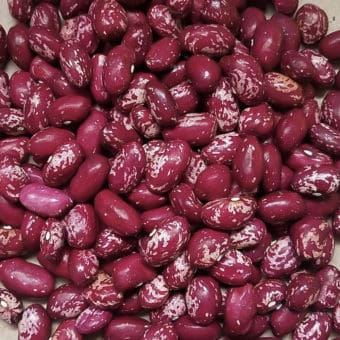
Phaseolus vulgaris. Purple Speckled. 95 days. Whipple is on our short list of favorite bean varieties that are adapted to the Pacific Northwest. Great rich flavor. We think it is especially good in chili and paired with copious amounts of garlic. Vigorous bush plants may have short runners. The beans themselves resemble Early Warwick but are…
Select options
This product has multiple variants. The options may be chosen on the product page
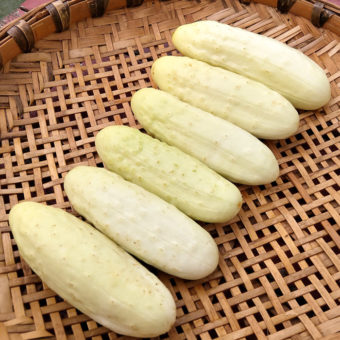
Cucumis sativus. Slicing. 50-60 days. White Heron slicing cucumbers are similar to True Lemon but with a classic slicer shape and lighter white color. Fruit are best harvested under 5” long, when thin skin is still tender enough to make peeling unnecessary. We like to harvest them when the stem end of the fruit just starts…
Select options
This product has multiple variants. The options may be chosen on the product page
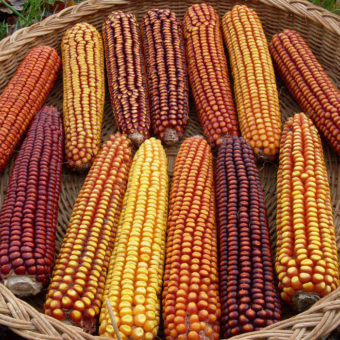
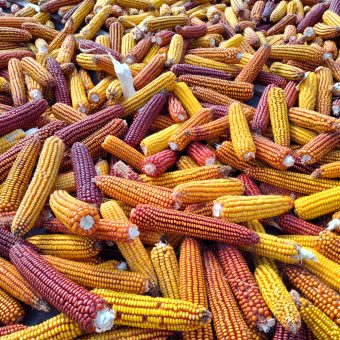
Zea mays. Flinty Dent. 90-100 days. Our main crop field corn that we grow for cornmeal, flour and for making masa. Open Oak Party Mix is the best corn we offer for nixtamalization and making your own hominy or pozole. After grinding, we sometimes sift out the coarse polenta from the flour and we have…
Select options
This product has multiple variants. The options may be chosen on the product page
Zea mays. Flinty Dent. 90 days. After several years of collaboration with the Dry Farming Institute, we are thrilled to offer Wildfire Dent Corn, a dry farming selection of our own Open Oak Party Mix Dent Corn. Received as breeding material from Dr. Lucas Nebert, of Oregon State University. Wildfire Dent Corn has been collaboratively…
Select options
This product has multiple variants. The options may be chosen on the product page
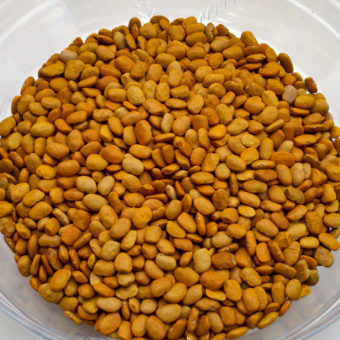
Cicer arietinum. Orange/Tan. A strain of Desi-type chickpea given to us by local staple food activist, Krishna Khalsa, via Harry MacCormack, who told us, “reportedly it gives those who eat it the power of the dragon.” Smallish, orange/tan seeds cook up nicely and are very versatile in the kitchen. The Desi-type of chickpeas are usually…
Select options
This product has multiple variants. The options may be chosen on the product page
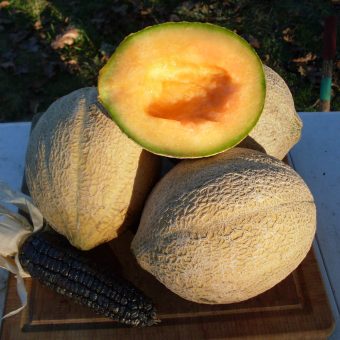
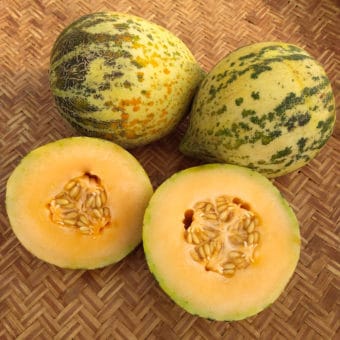
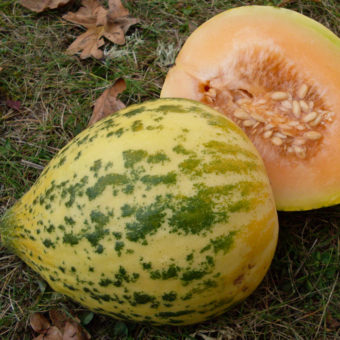
Cucumis melo. 80-90 days. Oregon heritage melon mentioned in the Slow Food book, Restoring Salmon Nation’s Food Traditions, compiled by Gary Paul Nabhan. Super juicy and sweet flavor melts in your mouth. Slightly oval shaped but more round than Pike or Spear. Earlier than many heritage melons but not a short season melon. We usually…
Select options
This product has multiple variants. The options may be chosen on the product page
Cucumis melo. 80-90 days. Unique and delightful, Sweet Freckles Melon has a sweet aromatic flavor with a smooth, dense texture. Unusual and attractive appearance, which is pear-shaped and freckled. Vines are exceedingly vigorous and while the stem does not slip when ripe, the color changes from green to orange. Not the earliest melon but it…
Select options
This product has multiple variants. The options may be chosen on the product page
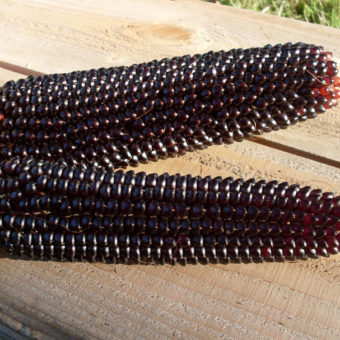
Zea mays. Popcorn. 90 days. One of the earliest maturing and easiest to grow popcorns. 6-8” ears on 6′ tall plants. Dark black kernels have a ruby-red, glassy shine when held in the right angle of light. The pointy kernels pop bright white with a small black hull still attached. The flavor is delicious, hearty…
Select options
This product has multiple variants. The options may be chosen on the product page
We’re thrilled to offer this collection as part of our collaboration with the good folks at the Dry Farm Institute (DFI). DFI has supported ongoing variety trials in Western Oregon since their inception in 2019 to help identify dry farm-adapted crop varieties and increase awareness and availability of these varieties through collaboration with seed stewards…
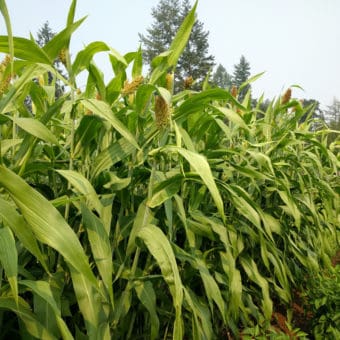
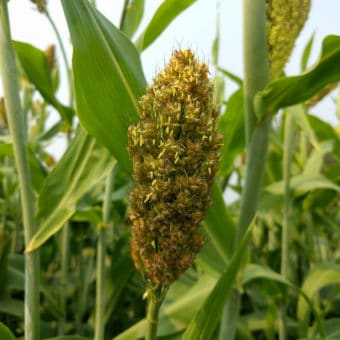
Sorghum bicolor. 120 days. As the name suggests, Jalisco Sugar Cane is the type of sorghum used for pressing to make sorghum molasses / sorgo / sorghum syrup. We have not tried to make it ourselves but the syrup is delicious and the stems sure are sweet to chew on! Produces well in our climate…
Select options
This product has multiple variants. The options may be chosen on the product page
Phaseolus acutifolius. Orange-Tan. 85 days. Tepary beans are small, flat beans, traditionally grown by Native Americans in the desert Southwest. Amazingly drought and heat tolerant, they prefer sandy alkaline soils, but Sacaton Brown performs very well for us even in our relatively heavy, acidic soil and cool climate. Tepary beans have more protein and higher…
Select options
This product has multiple variants. The options may be chosen on the product page
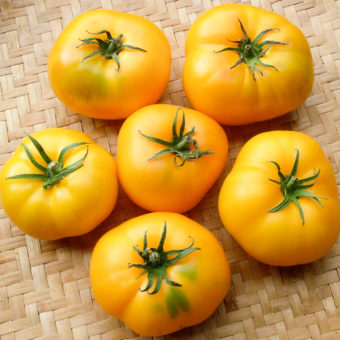
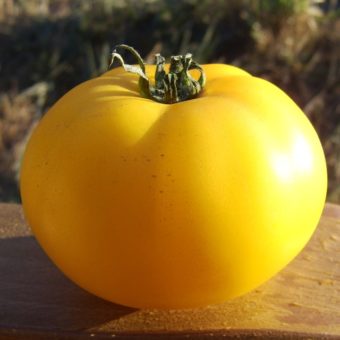
Solanum lycopersicum.Yellow. 65-70 days. Indet. Earlier than most other beefsteak types, this gorgeous, 3-5″ round oblate, 6-12 oz, yellow beefsteak comes on strong in those seasons when many other tomatoes struggle to ripen. In addition to its earliness and productivity, its impressive delicious flavor is much better than other yellow tomatoes, with a slightly acidic…
Select options
This product has multiple variants. The options may be chosen on the product page
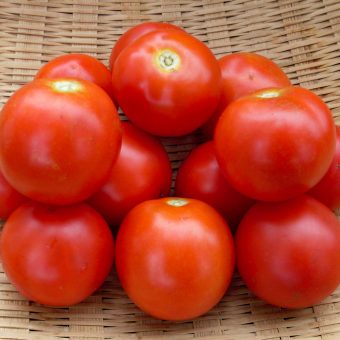
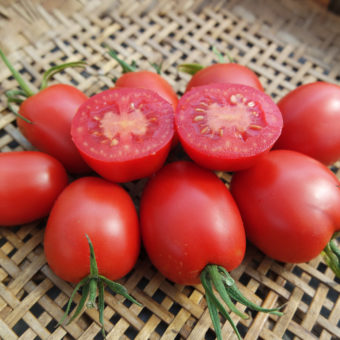
Solanum lycopersicum. Red Paste. 75 days. Indet. Seemingly hundreds of 2-3″ meaty, blemish free, elongated egg-shaped, 3-4 oz fruit. When the rest in the greenhouse had succumbed to mold late in the season, the Baylor Paste was still rockin’! Also produces well outside, maintaining quality fruit very late into the season. No blossom end rot…
Select options
This product has multiple variants. The options may be chosen on the product page
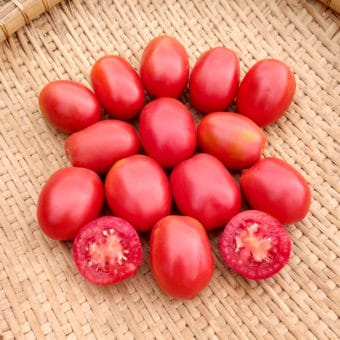
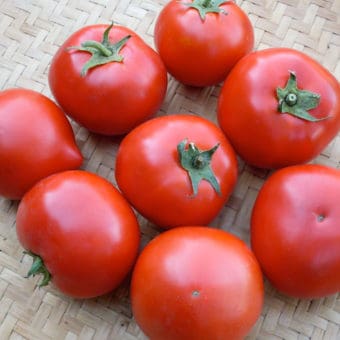
Solanum lycopersicum. Red Paste. 70-75 days. Det. Deep red, 2 ½” slightly oval, 2-3 oz fruit with exceptional sweet flavor on vigorous plants that are extremely prolific, even in cool conditions. Juicy and thick walled, these paste-type fruit are good for processing and also fresh eating. Fruit detaches without calyx, which makes for fast picking…
Select options
This product has multiple variants. The options may be chosen on the product page
Solanum lycopersicum. 60-65 days. Semi-det. Bushy plants produce clusters of 4-6 oz flat, lightly ribbed, red fruit. Good firmness in addition to excellent flavor, two attributes that make Marmande a perfect variety for market farms. Good when eaten fresh or cooked. Very dependably yields outdoors, even in cool summers. Traditional variety from the south of…
Select options
This product has multiple variants. The options may be chosen on the product page
Solanum lycopersicum. Yellow. 50-65 days. Det. Possibly the best super early yellow determinate tomato we have found. Native Sun’s flavorful 3-4 oz lemon yellow fruit are very satisfying and refreshing. As early as subarctic tomatoes with much more flavor and larger size. Multiple concentrated yields on healthy short bushes. Crack resistant and blemish free. Oregon-bred…
Select options
This product has multiple variants. The options may be chosen on the product page
Solanum lycopersicum. 70-75 days. Semi-det. Potato Leaf. 4-6 oz perfect, red globes with great flavor. Potato leaf type with uniquely large leaves that keep fruit well shaded on compact plants. Although nothing is perfect, we selected this variety from what many believe to be the perfect tomato, Early Girl F1. We focused on fruit size,…
Select options
This product has multiple variants. The options may be chosen on the product page
Solanum lycopersicum. Red Paste. 70 days. Indet. Vigorous, medium-sized, 2-4 oz, multiuse Roma with great flavor. Quadro was bred in Germany for late blight resistance, and for growing outdoors or in the greenhouse. High yields late into the season. Moderately juicy paste is good for many uses – we love it for salsa! Blocky, almost…
Select options
This product has multiple variants. The options may be chosen on the product page
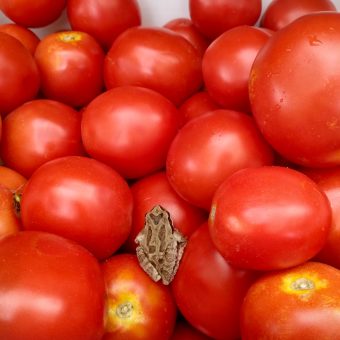
Solanum lycopersicum. 60-70 days. Det. Produces large, red globes that are slightly oblate. Dual purpose processing and slicing type. Very nice variety for its dark red color, good flavor and blemish-free fruit. When harvested, calyx stays with the plant, not the fruit. Dark green, healthy looking plants provide good leaf cover so there is less…
Select options
This product has multiple variants. The options may be chosen on the product page
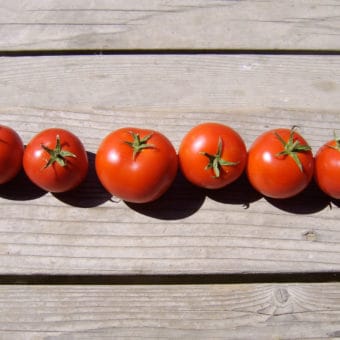
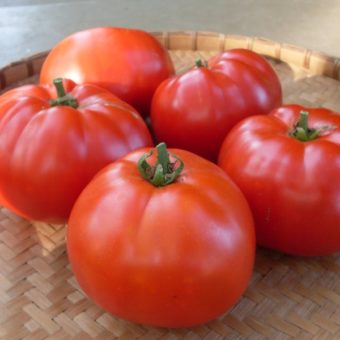
Solanum lycopersicum. 70 days. Det. With its big yields of 7-10 oz, plump red slicers, Starfire is a really good production tomato for the Willamette Valley. It would probably perform very well throughout the Pacific Northwest, if not the entire northern US. Flavor is very good and it’s nicely juicy. The vigorous bushy plants have…
Select options
This product has multiple variants. The options may be chosen on the product page
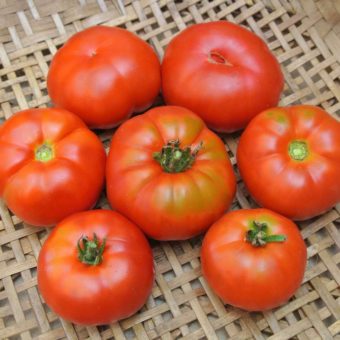
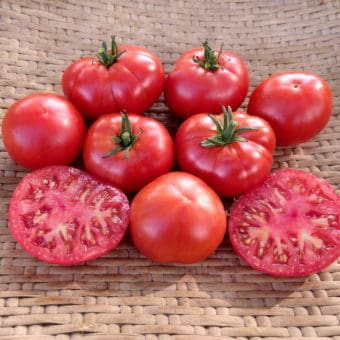
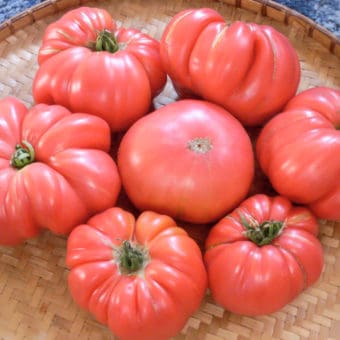
Solanum lycopersicum. Pink. 80 days. Indet. Potato Leaf. Big, pink, 12-16 oz beefsteak fruit are somewhat variable in shape – many with a rather ribbed appearance while some are a more flattened globe shape. We find it to be earlier to mature and heavier yielding than the ubiquitous Brandywine and recommend growing Tiffen Mennonite instead….
Select options
This product has multiple variants. The options may be chosen on the product page
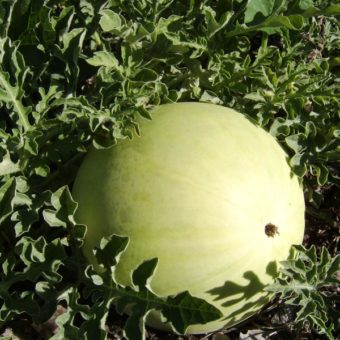
Citrullus lanatus. 90-100 days. A unique and rare winter keeper type watermelon. With light-green skin and pink-red flesh, these melons have a good sweetness and excellent flavor. Some refer to this type as a Christmas watermelon because once picked, it can be stored into December. We have eaten them for Thanksgiving and later into winter….
Select options
This product has multiple variants. The options may be chosen on the product page
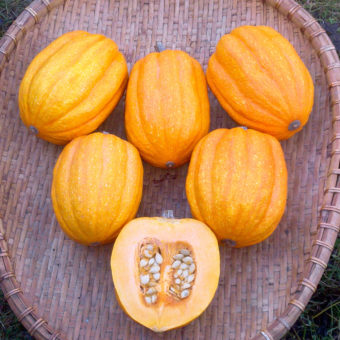
Cucurbita pepo. 85 days. Small, orange, acorn-type fruit are an ideal size for single-serving winter squash. This variety shuns the stereotype of acorn squash being bland. Five times more flavorful than most acorn squash, but about half the size. We often get good feedback from commercial growers about Gill’s Golden Pippin’s productivity and flavor. We…
Select options
This product has multiple variants. The options may be chosen on the product page


 The Dry Farming Institute (DFI) is a 501(c)3 nonprofit organization that engages growers and communities in collectively adapting to less water. DFI has supported ongoing variety trials in Western Oregon since their inception in 2019 to help identify dry farm-adapted crop varieties and increase awareness and availability of these varieties through collaboration with seed stewards and companies like us (Adaptive Seeds)!